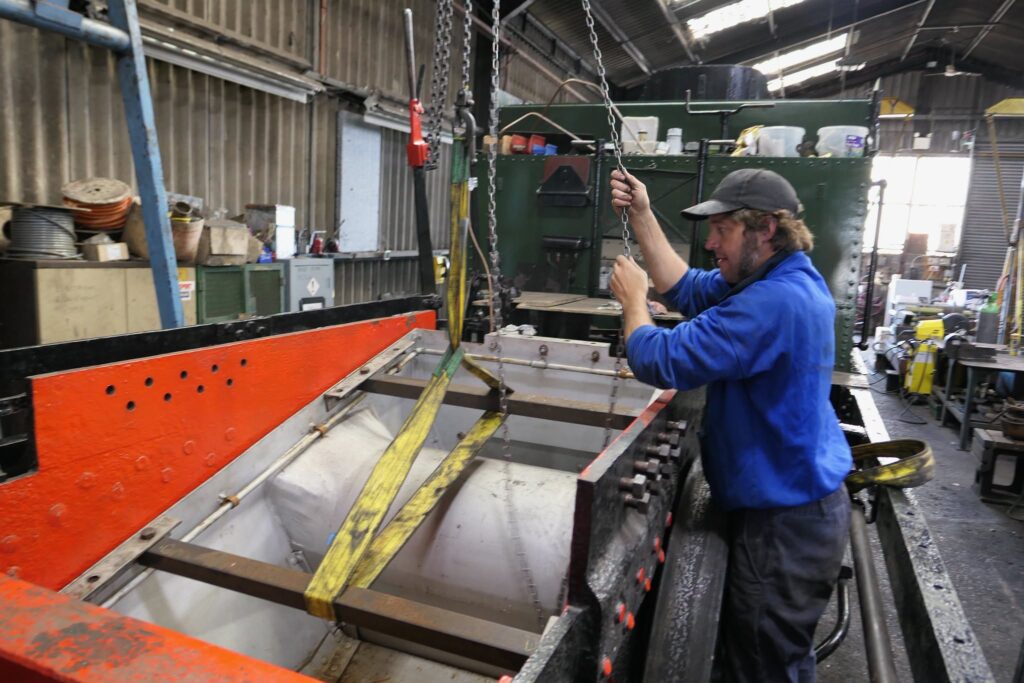
Progress October 2026
Week Two
Work on 4253 this week included making new studs for the blow down valve
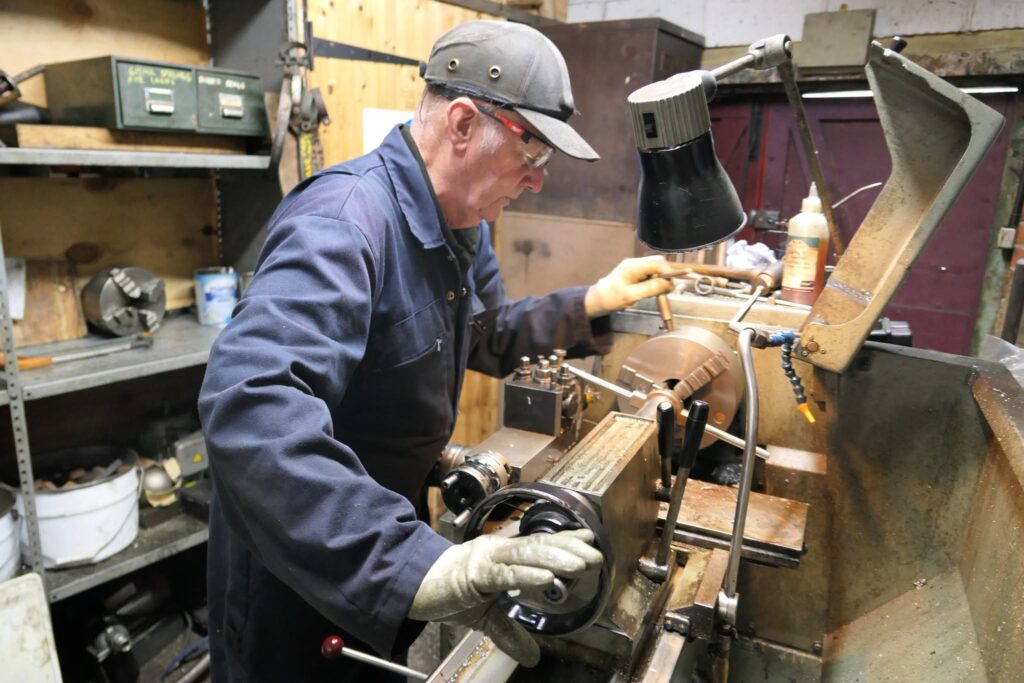
and trial fitting them (they have to come out again or the front of the firebox cannot clear a frame stretcher when the boiler is lowered back into the frames).
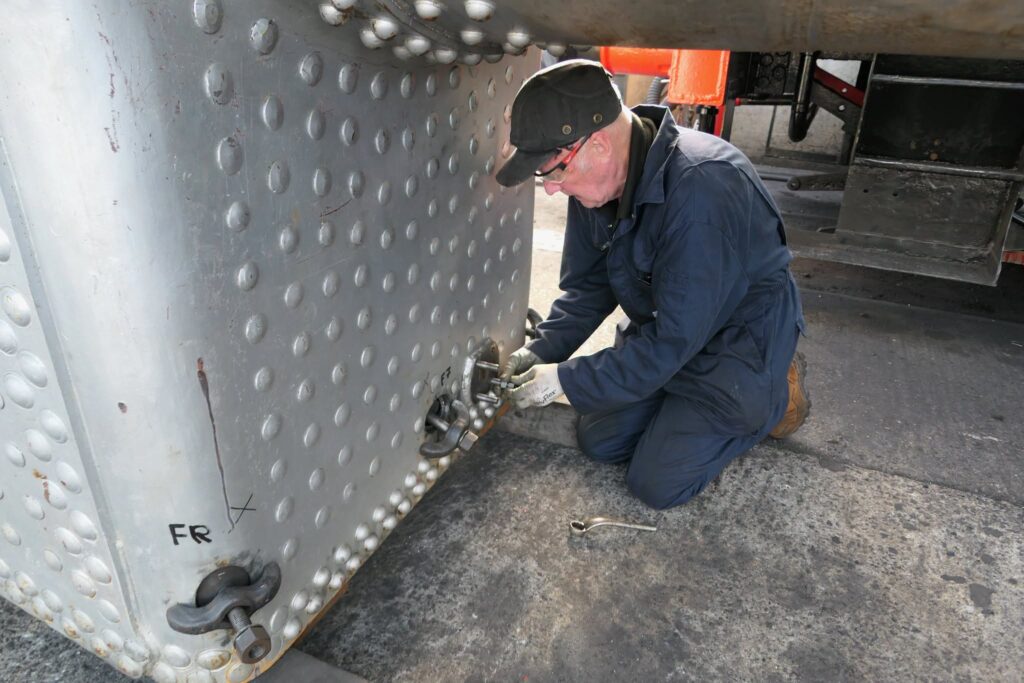
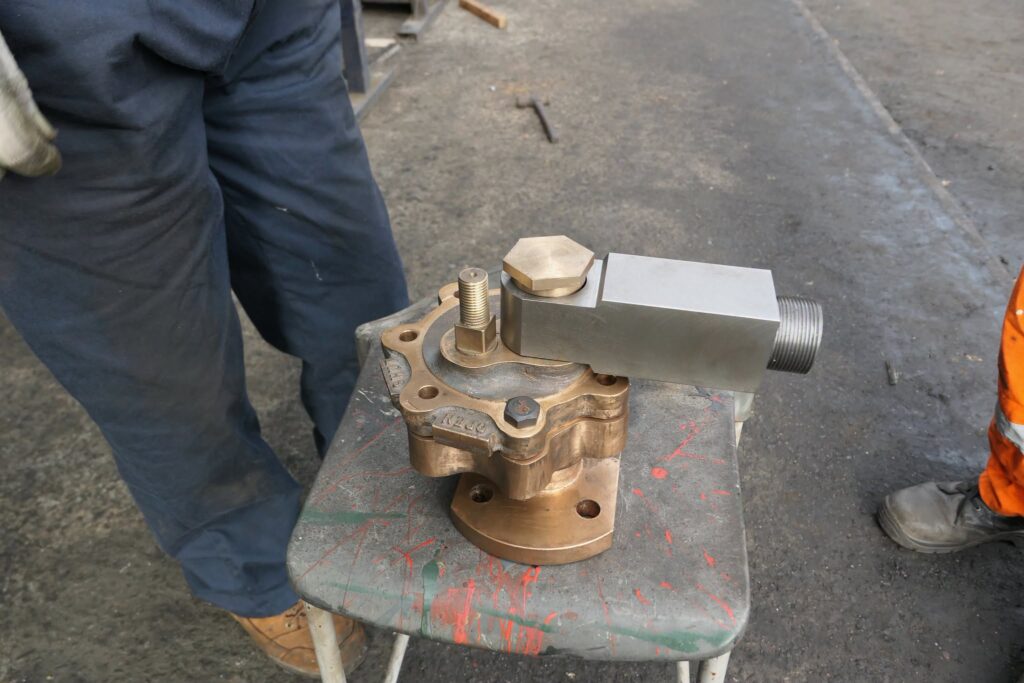
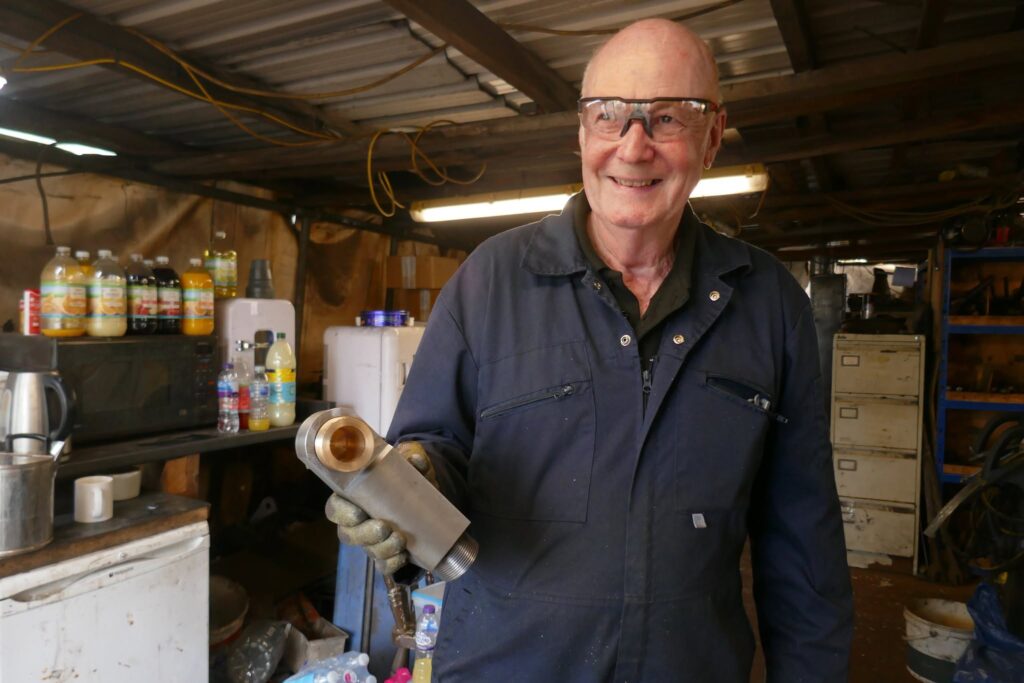
The machining of the banjo assembly for the blowdown valve itself was also finished and trial fitted.
The last of the cladding filler strips that will fit round the front boiler support bracket were also finished
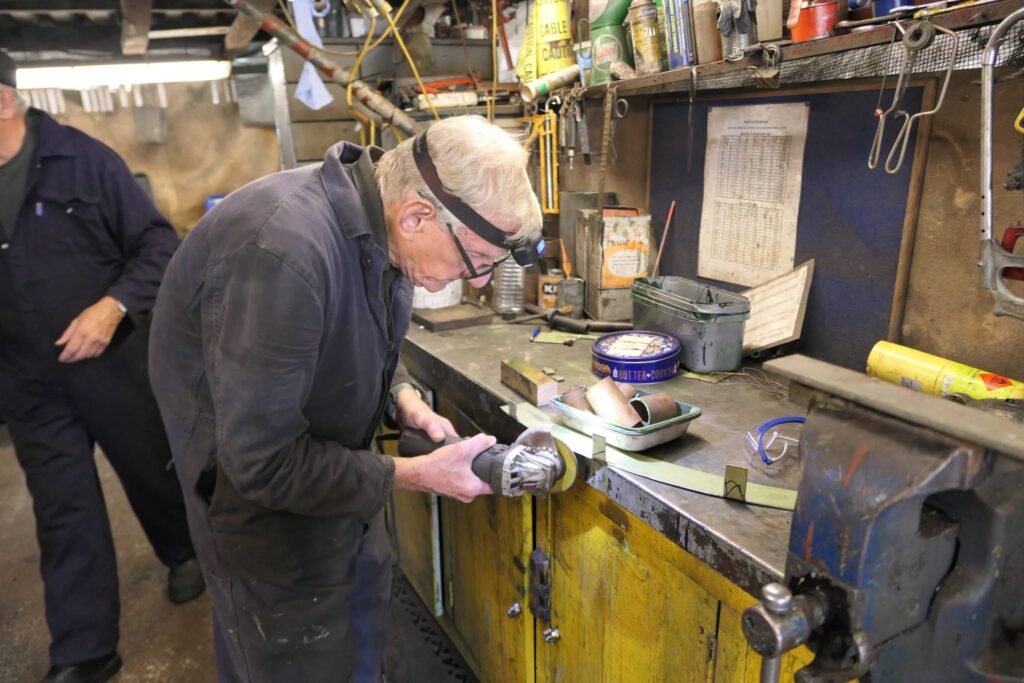
and successfully trial fitted.
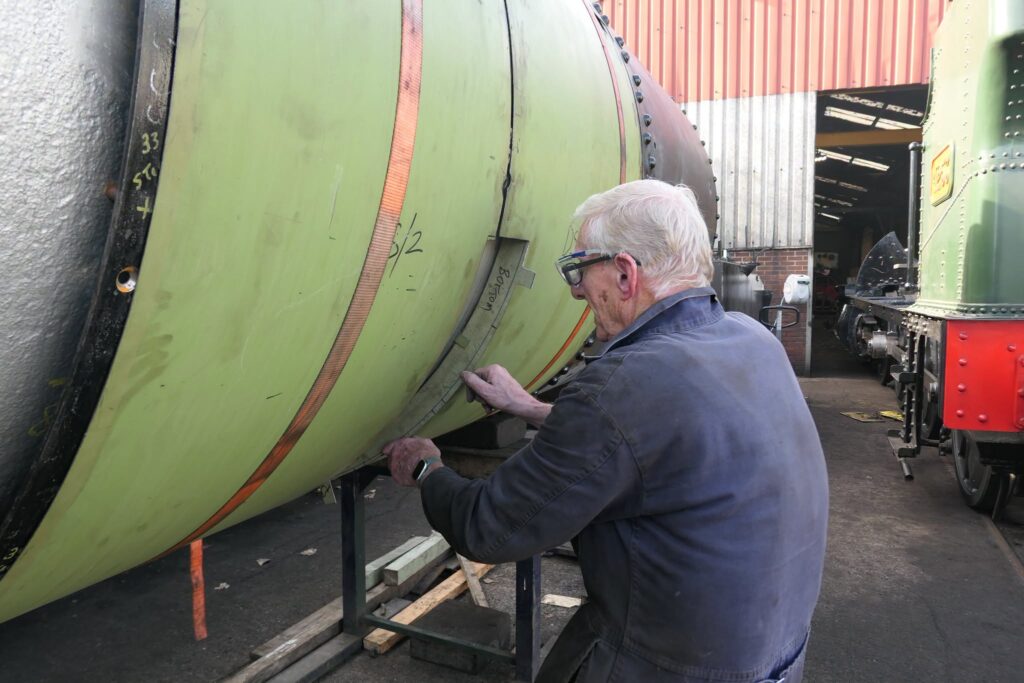
Additionally, the superheater header had all its new studs fitted.
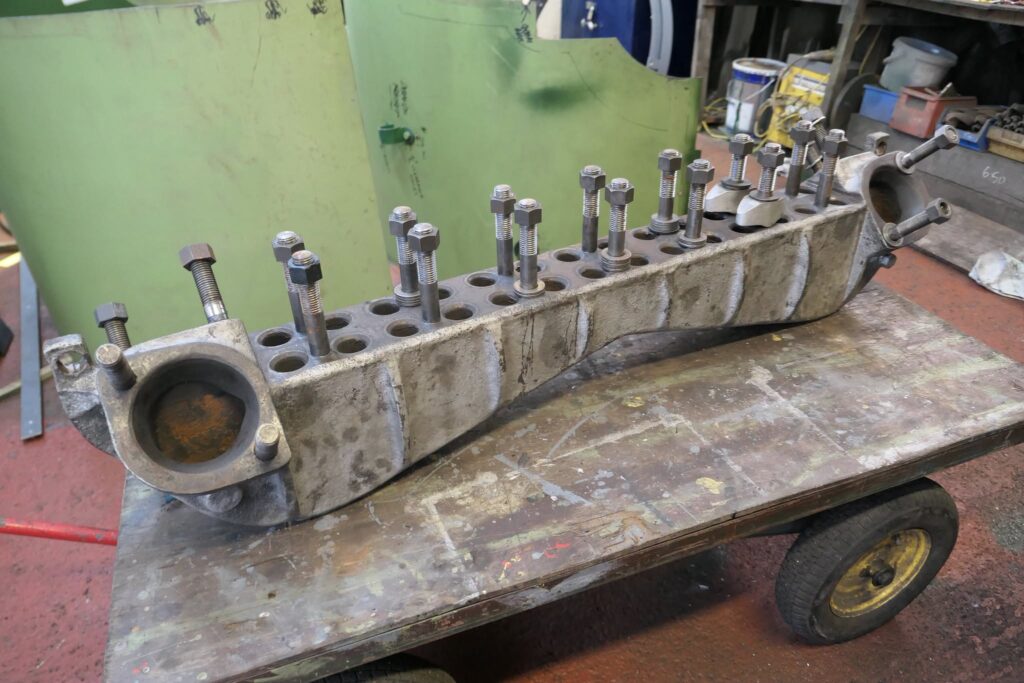
On 4270, work concentrated on the ashpan which was cleaned of all the rust and crud,
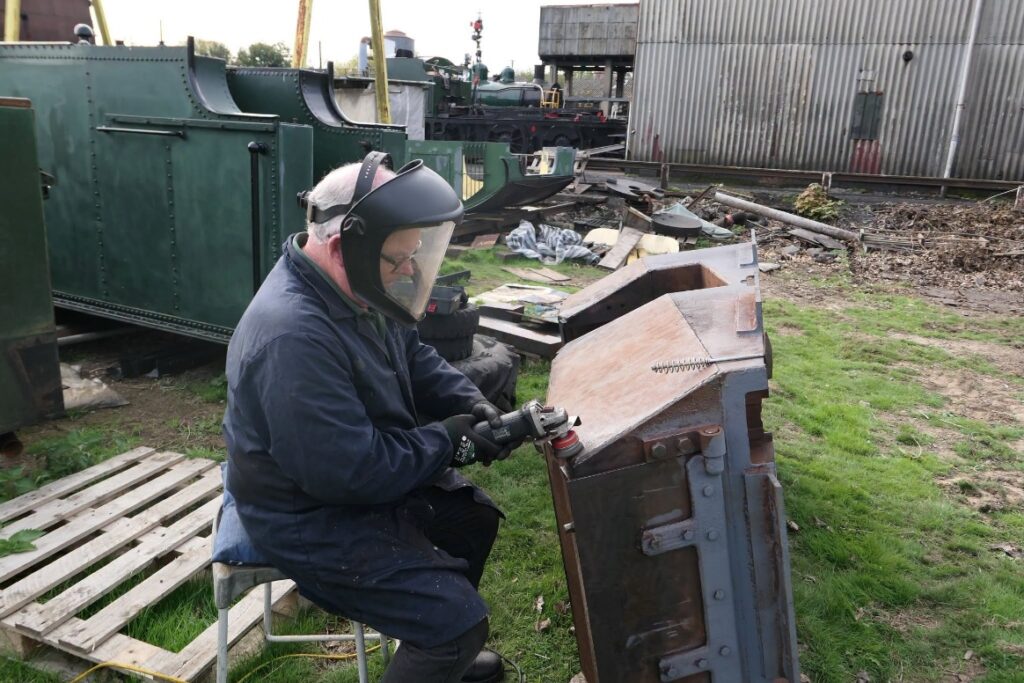
partially repainted and the inner damper doors removed and dismantled for repair. Both had suffered quite severe distortion from the heat as the shape of this one shows.
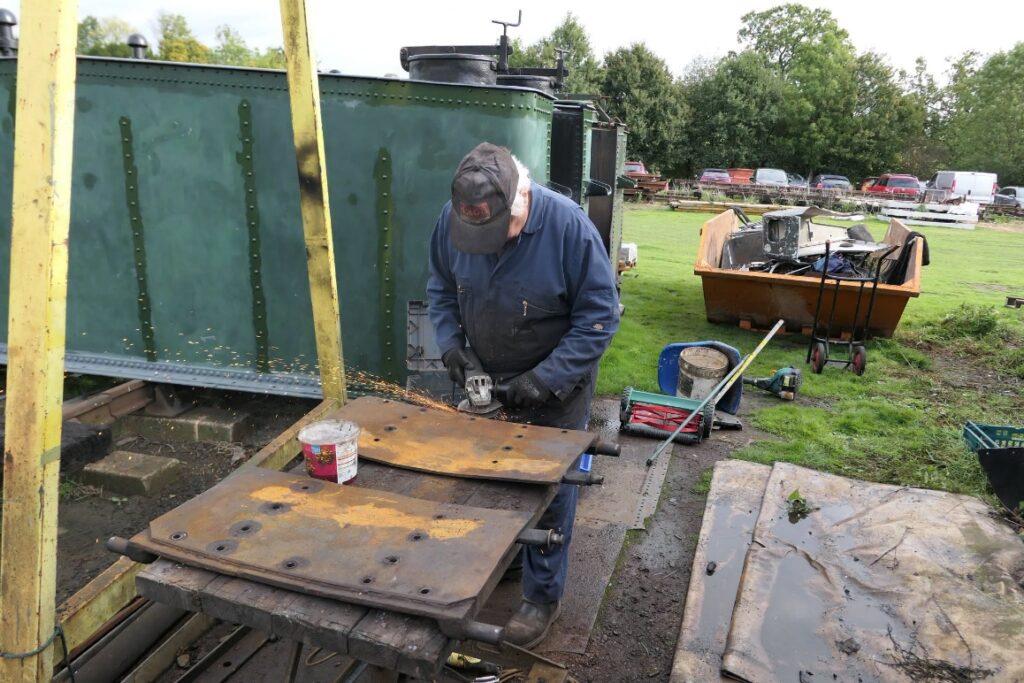
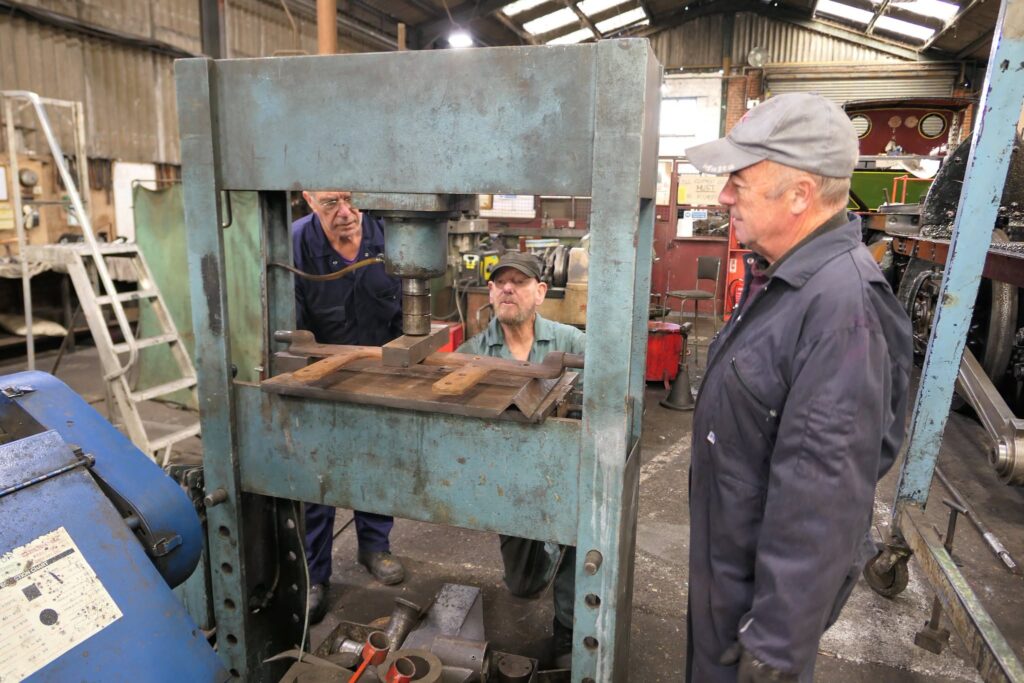
Once apart, the doors and the hinges were placed in the hydraulic press and worked on until straight again.
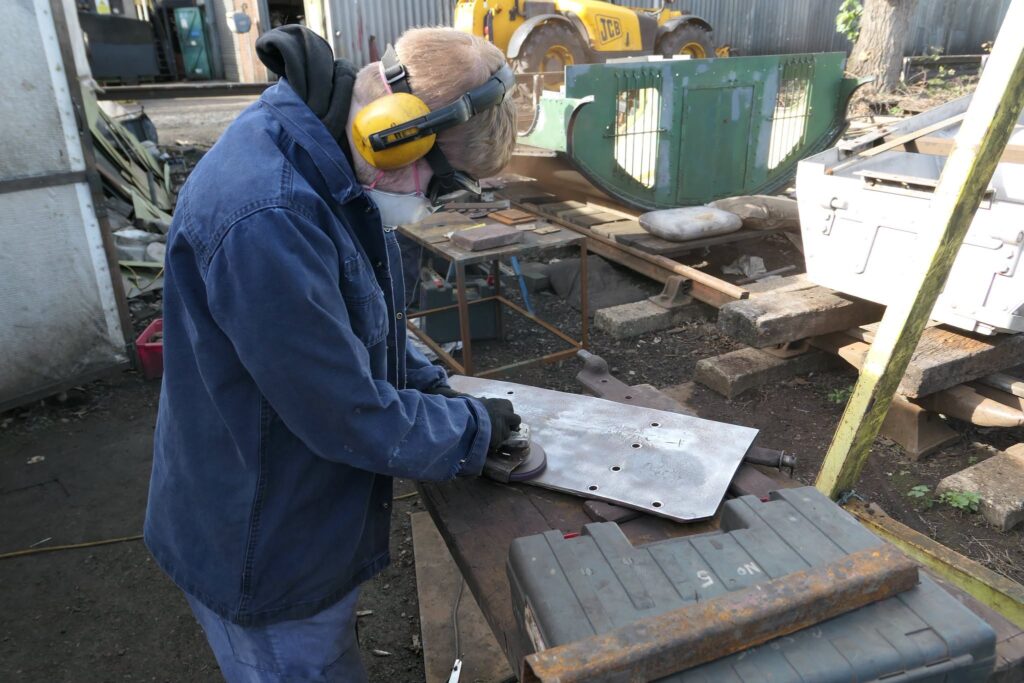
After that, they too were cleaned of all the rust prior to being painted and re-assembled.
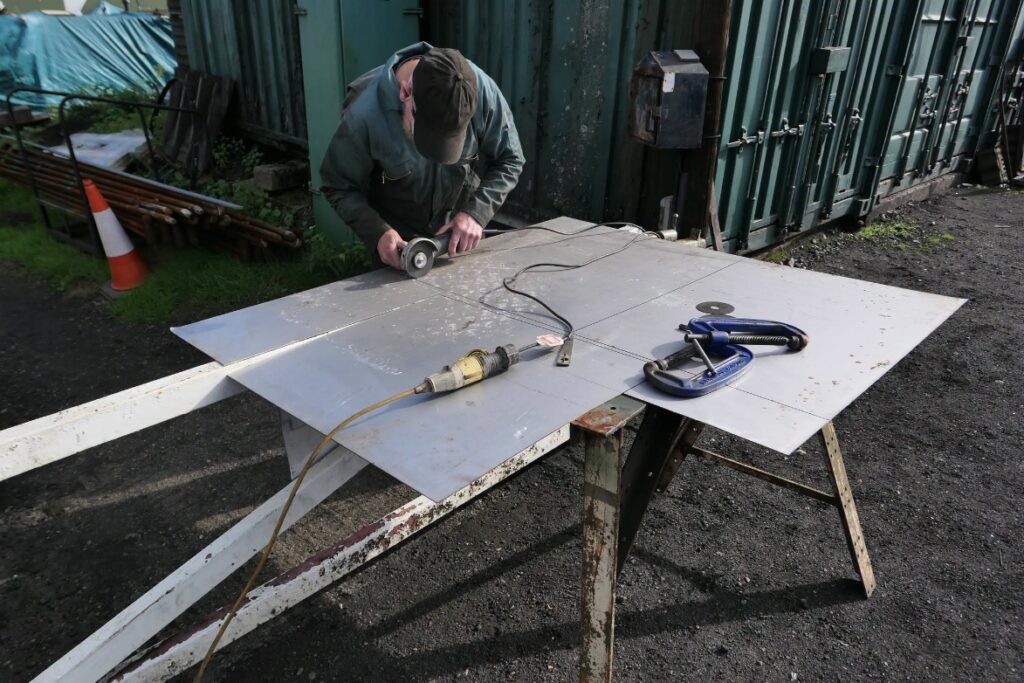
A final job was cutting steel plate sections to be used as reinforcement panels on the new man doors being made for the loco shed.
Week One
A lot achieved this week starting on Monday when we lifted the boilers out of the frames on both 4253 and 4270. Once the 36-ton crane was in steam, we shunted both locos out into the yard and then moved 4270 to the adjacent road so we could tackle 4253’s boiler first.
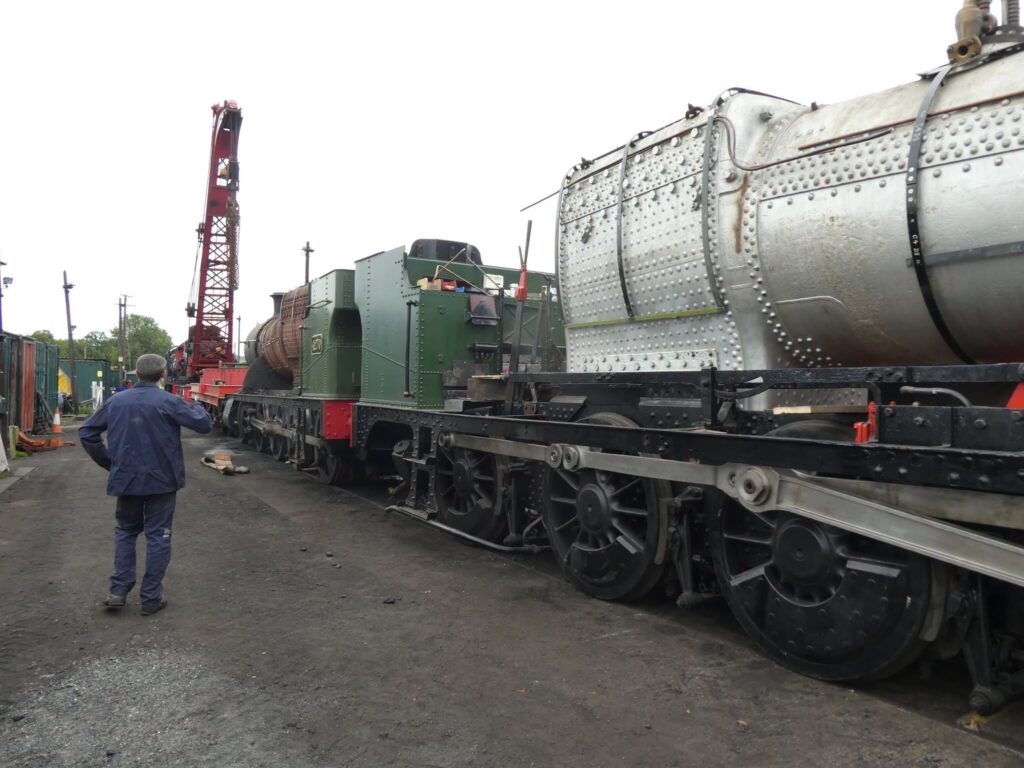
Once the strops were in place, the boiler lifted clean and level
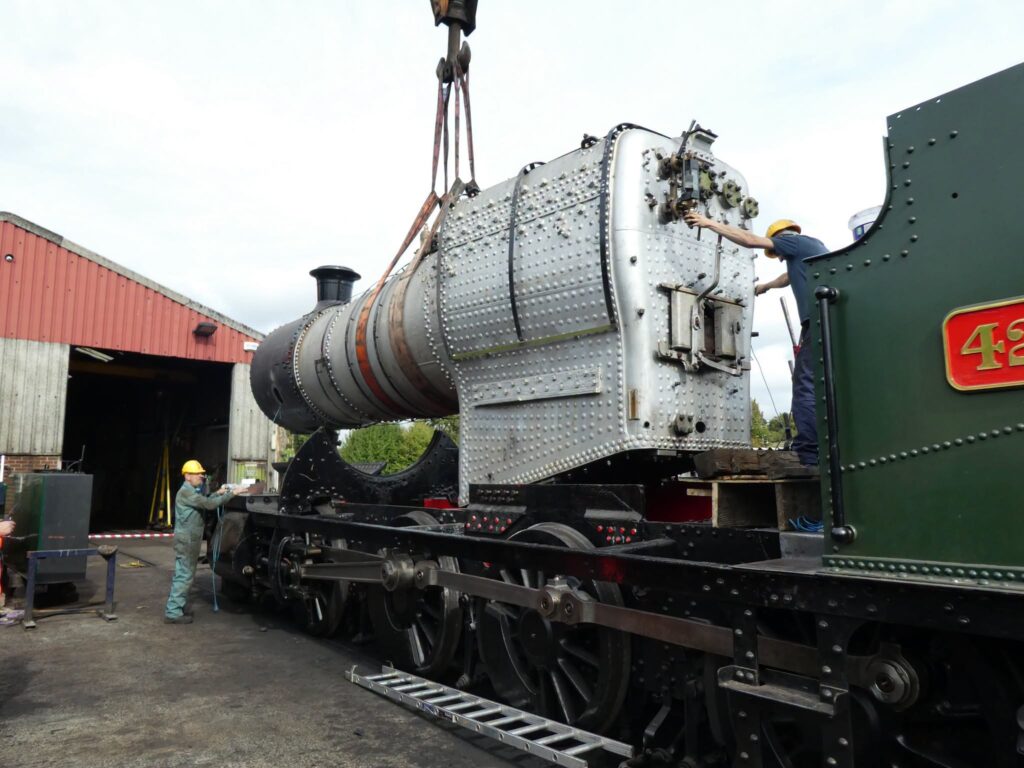
and was then slewed to the side and lowered onto blocks and a trestle.
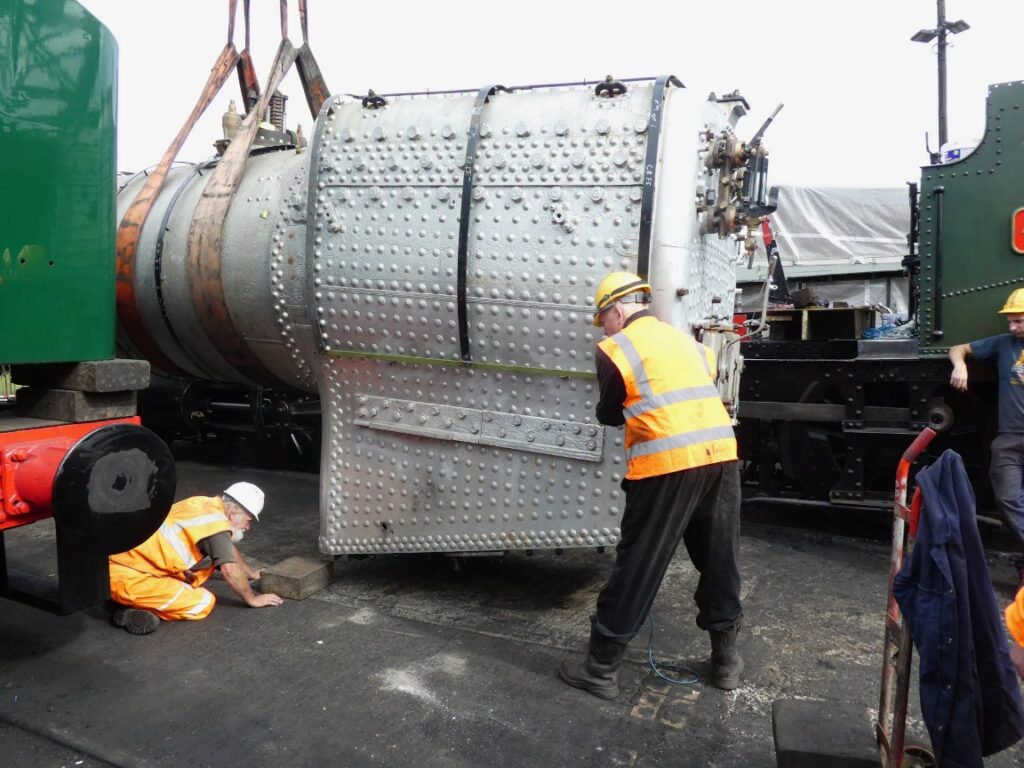
4253’s frames were then shunted back towards the shed and the crane moved down so we could lift the ashpan and lower it into the frames to judge the fit.
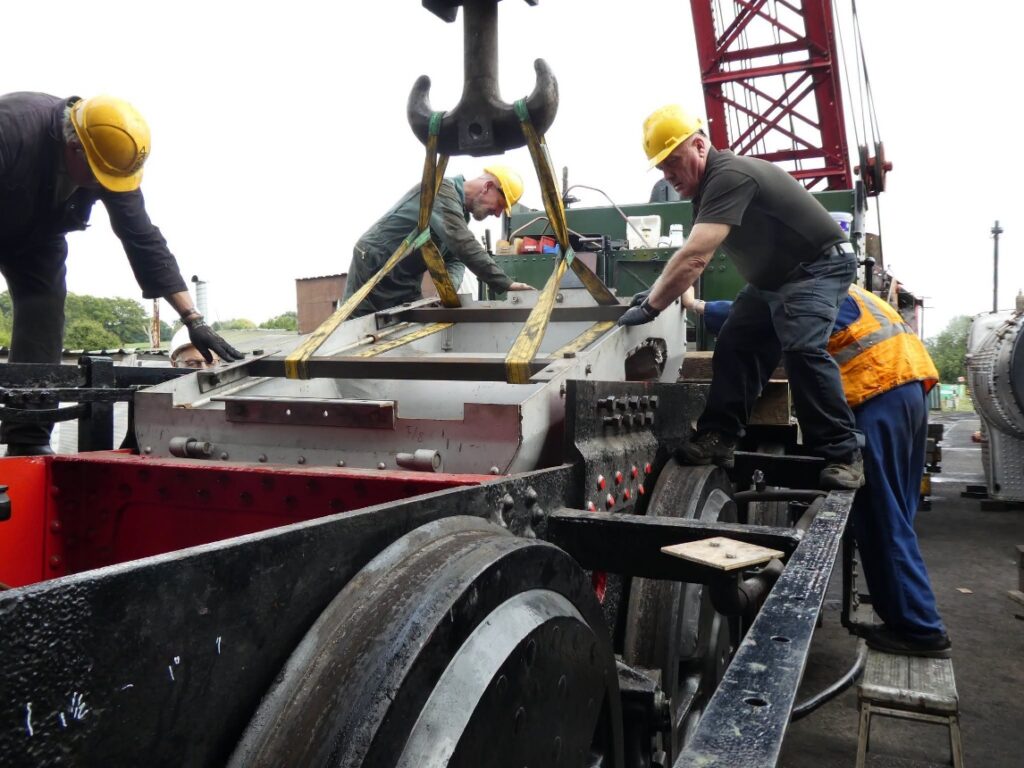
After that, more shunting was carried out to move 4270 into position for its boiler lift. The crane was moved back and the lifting strops connected up
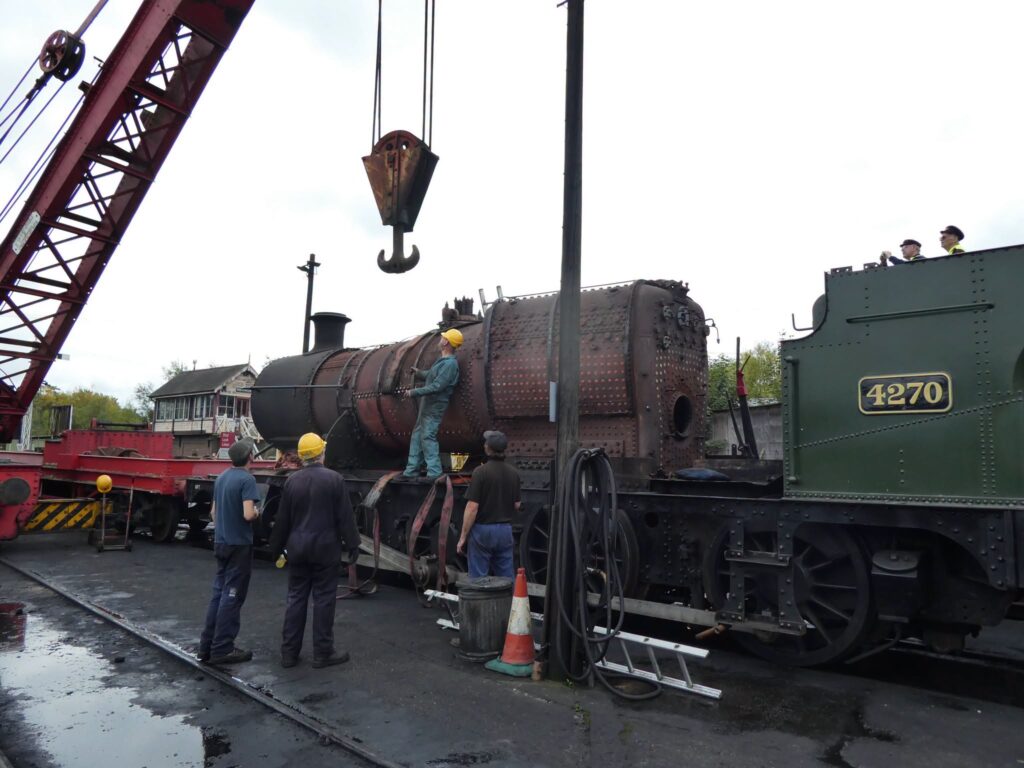
followed by another nicely level lift.
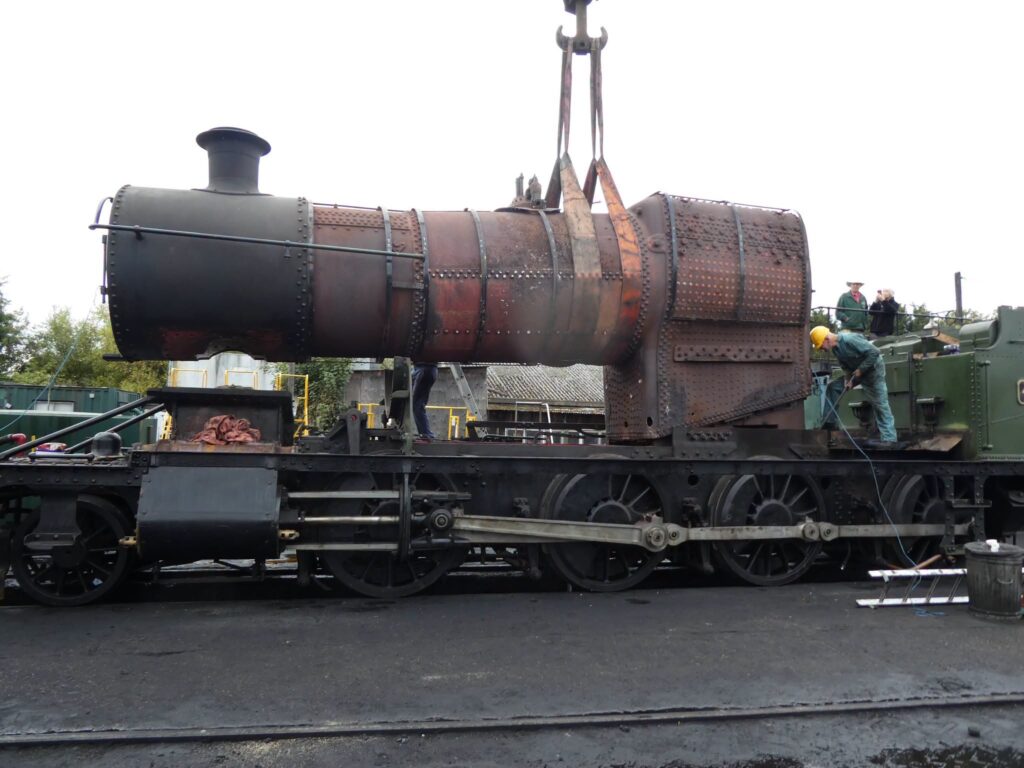
We’re getting quite good at knowing the centre of balance depending on what’s still attached to the boiler. 4270 had had all the smokebox fittings removed so, with less weight at the front end, the strops are positioned behind the safety valves whereas 4253, with many of the heavy smokebox fittings still in place, needed the strops placed one either side of the safety valves.
Once out, it was slewed to the side and lowered to the ground so the ashpan could be removed
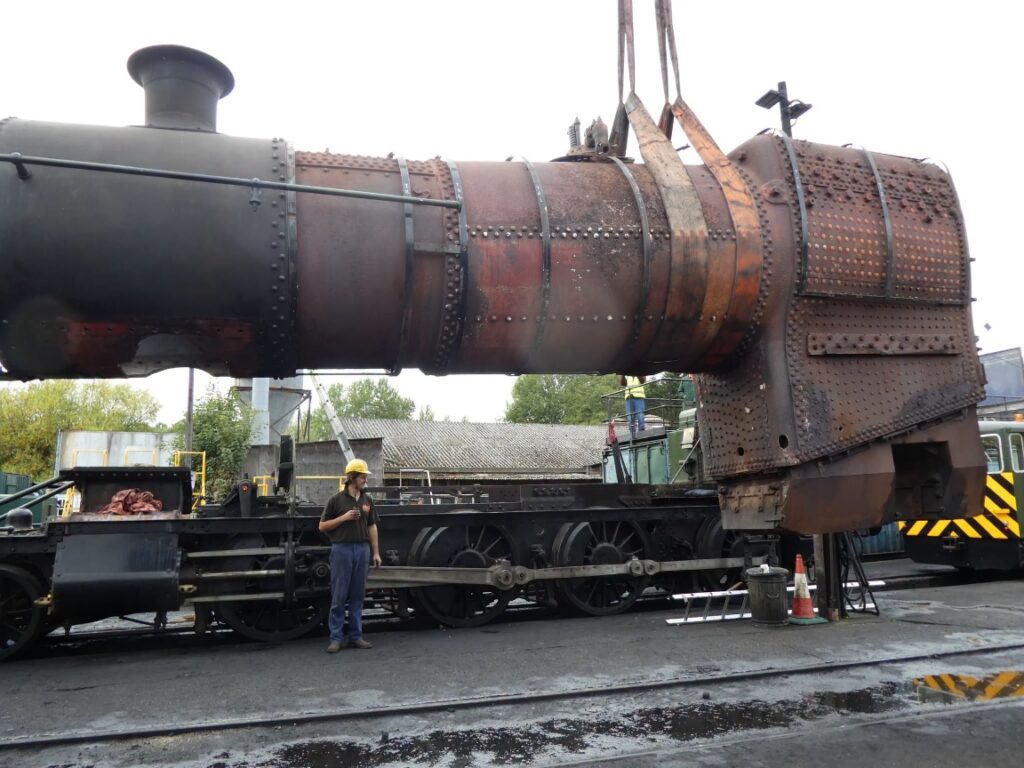
which, inevitably, required most of the retaining nuts to be cut off,
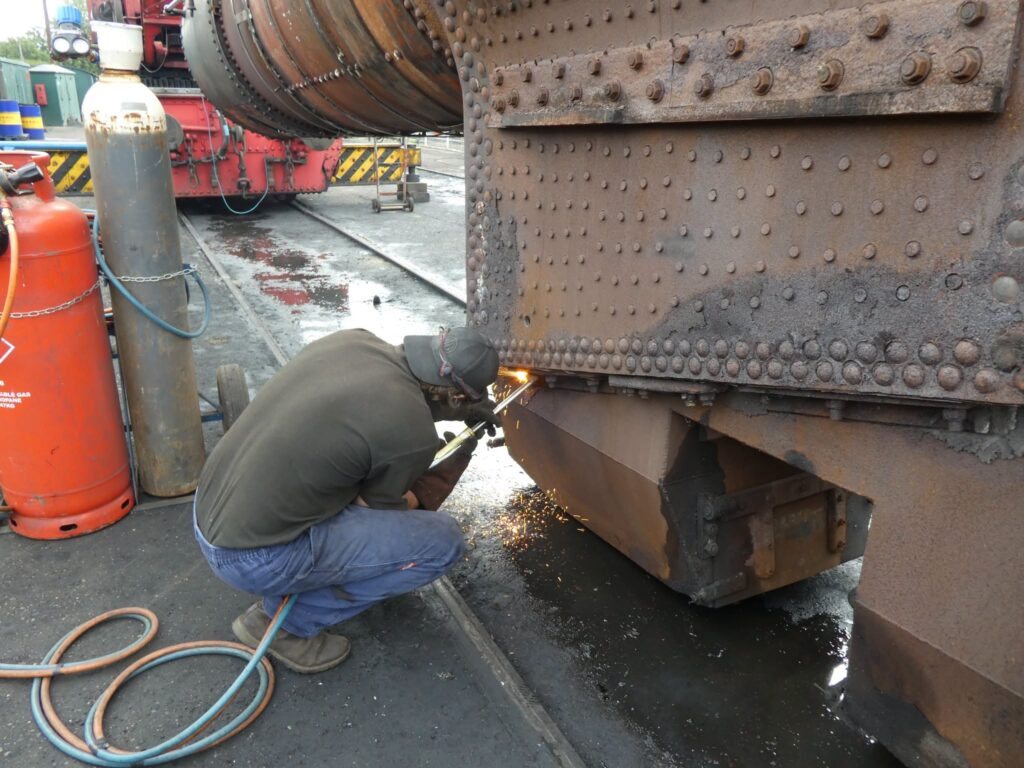
Once done, the boiler was lifted again, placed on blocks and sleepers on a spare wagon
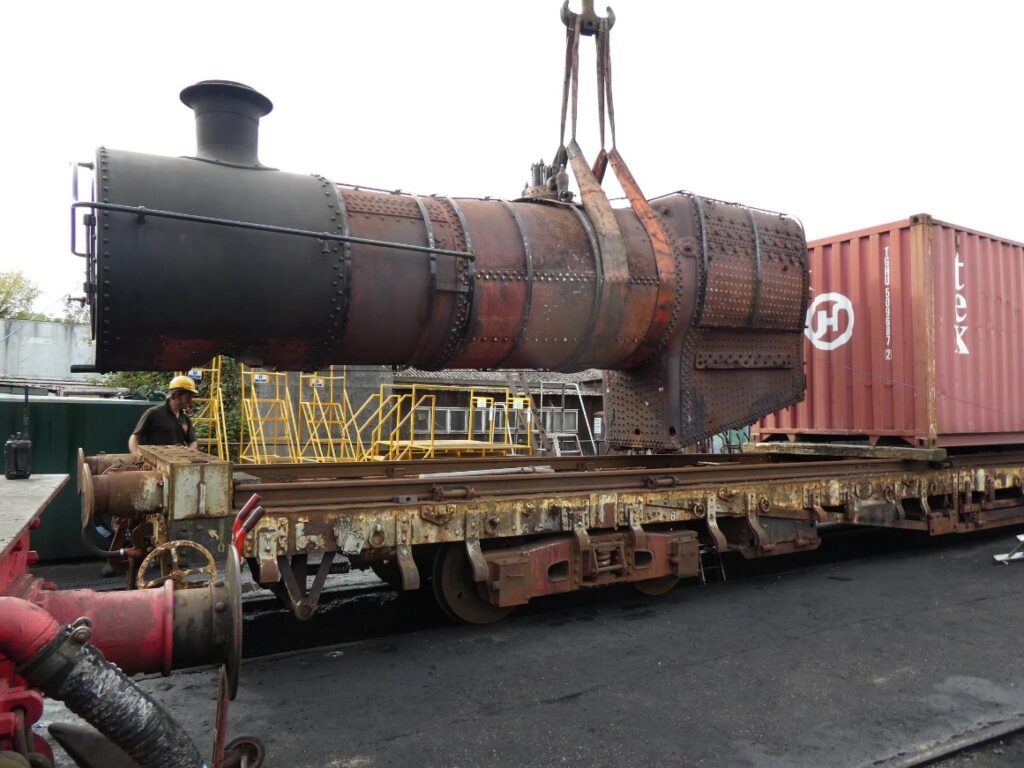
and then strapped down before being shunted out of the way.
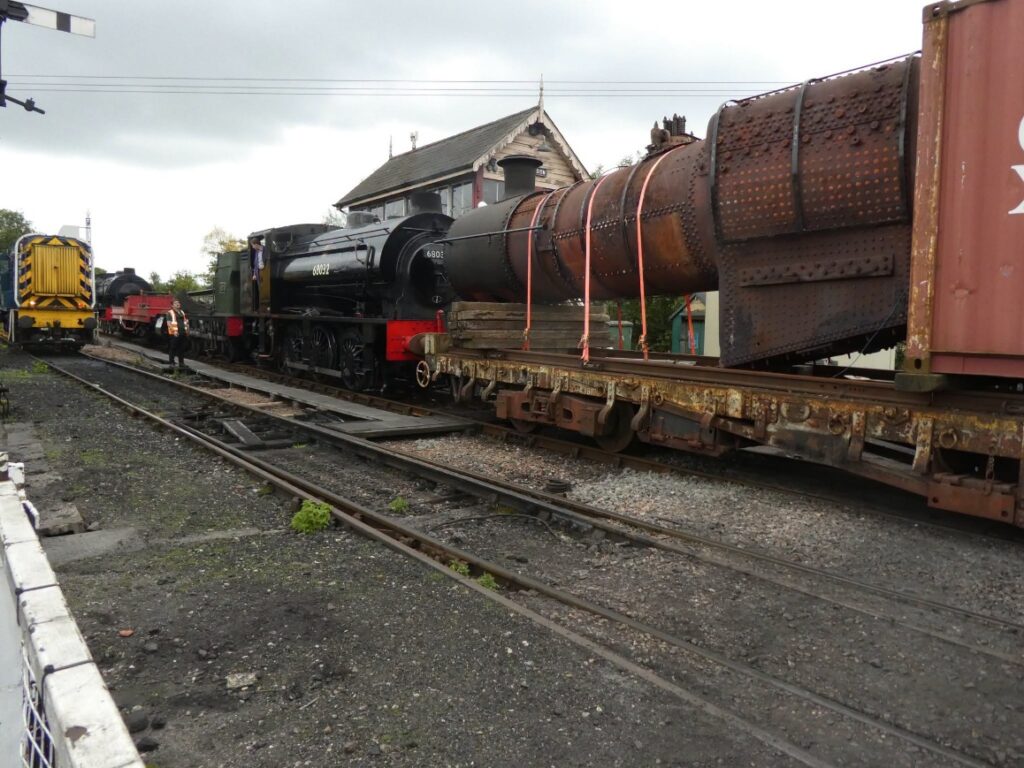
The final lift of the day was on the P class which needed its middle wheel set re-fitted. The frames were shunted into position once the wagon carrying 4270’s boiler had been moved out
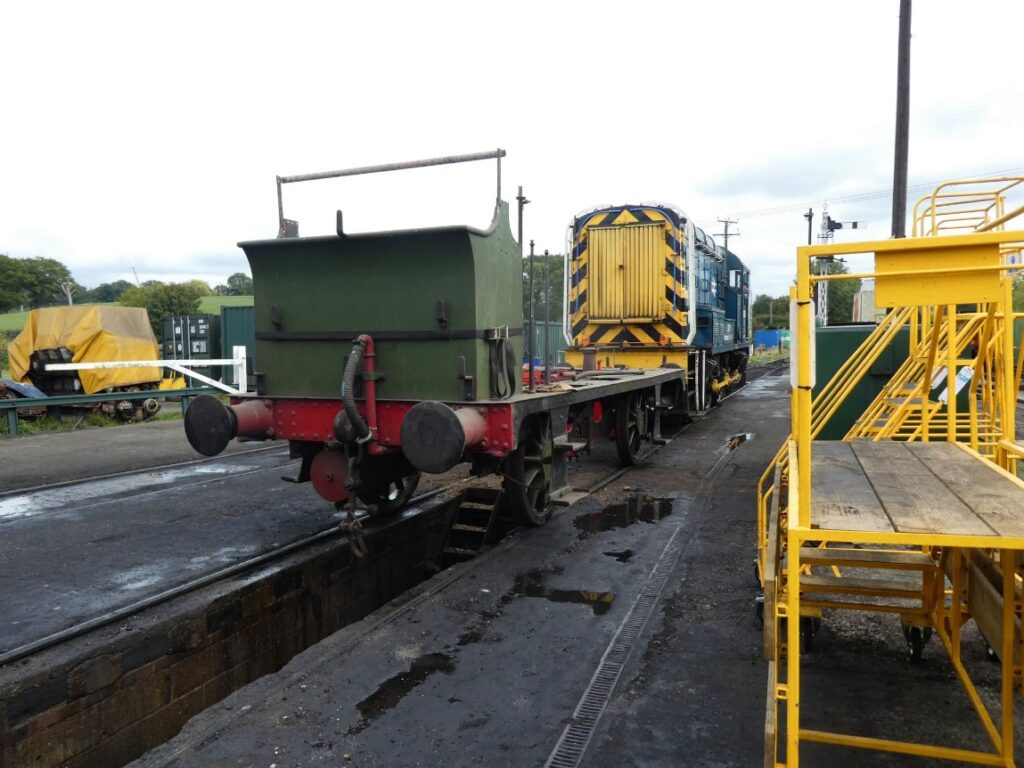
and the crane was then used to lift the axle and lower it onto the rails
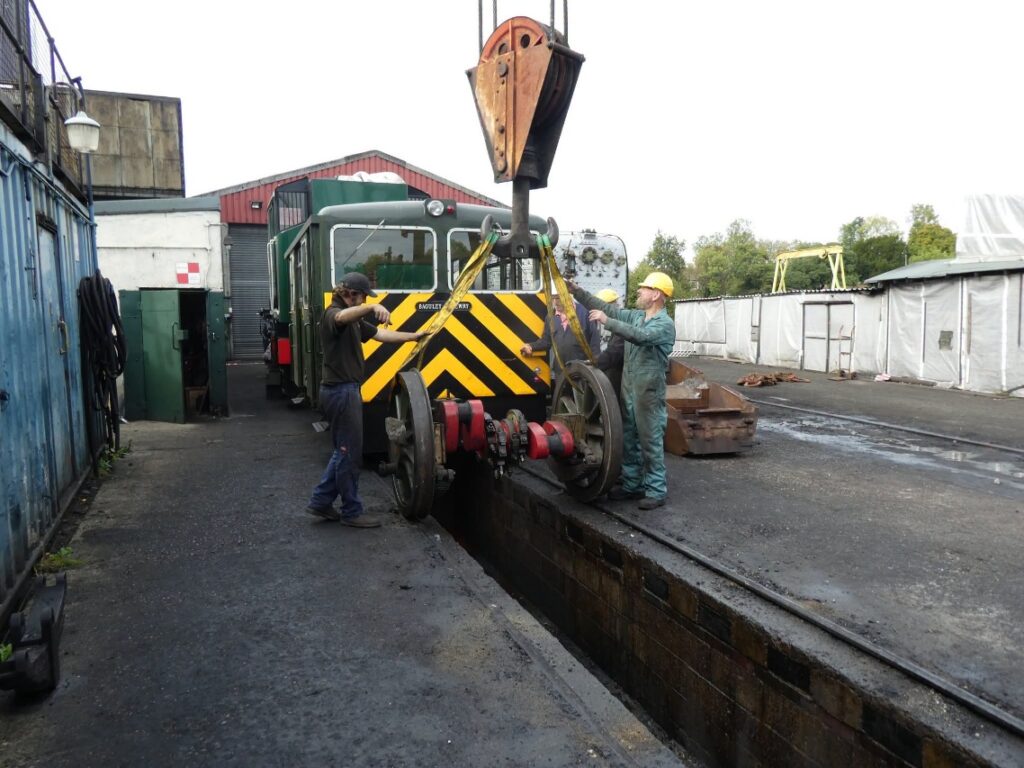
after which the frames were lifted,
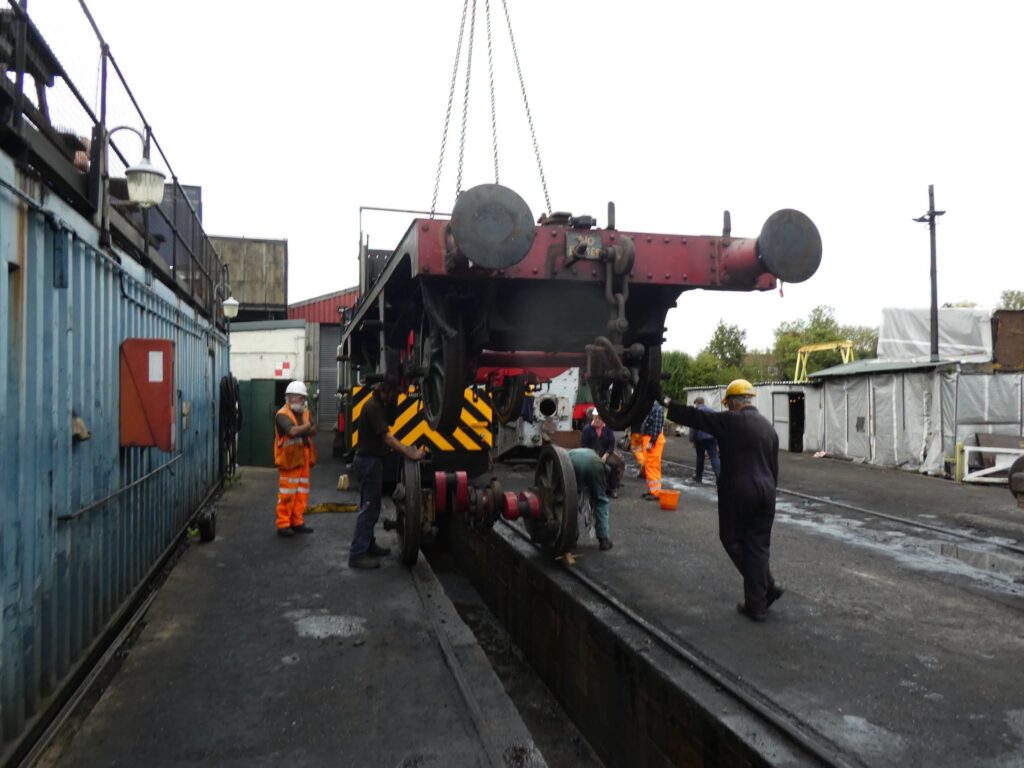
the wheel set rolled underneath into position and the frames lowered onto it after which the horn guides were bolted on to retain it.
Best of all, the rain held off until we’d finished the lifts and were just clearing up and lowering the crane’s jib back onto its match wagon.
Tuesday started with moving 4270’s ashpan into the field so we could begin needle gunning the rust off it and access its condition. With 4253’s boiler in a more accessible position on the ground, the front cladding sheets were refitted to trim the under sides at a workable height and allow us to make sure the filling sheets fit where the front boiler holding bracket is located. The pipe cover on the smokebox side had the fixing holes drilled and tapped followed by a trial fitting
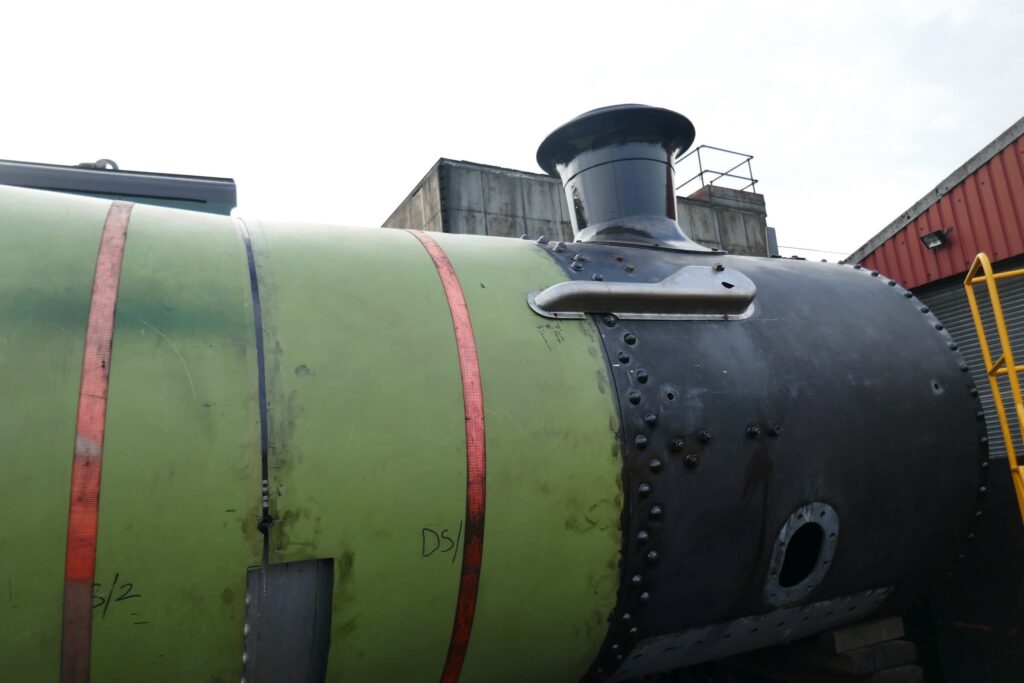
and the fire hole door, operating linkage and runners were removed for the studs to be finished off.
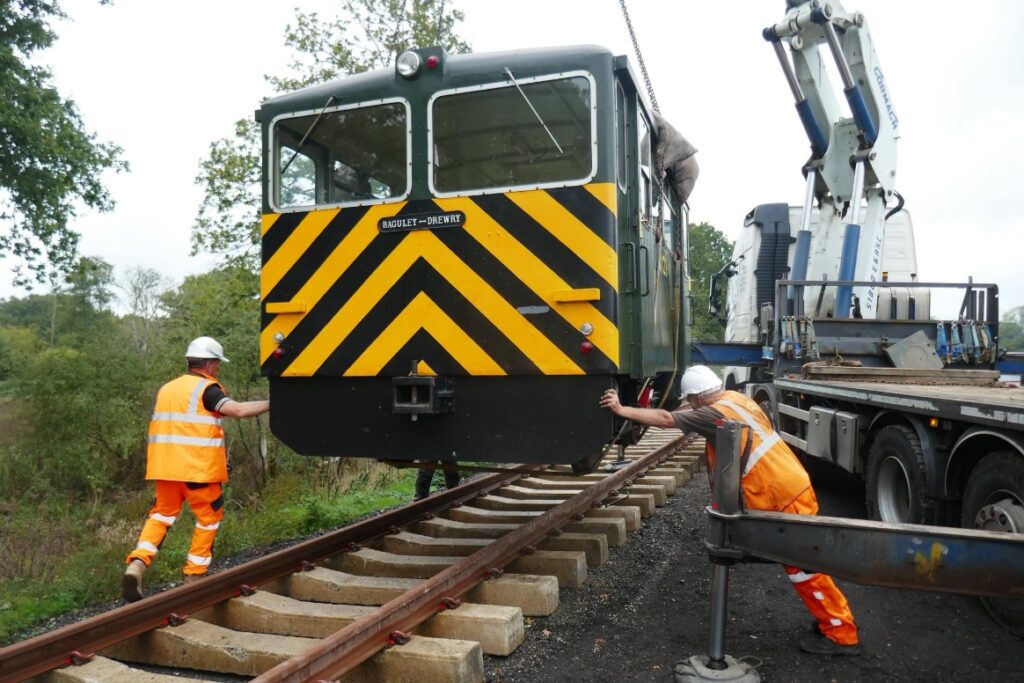
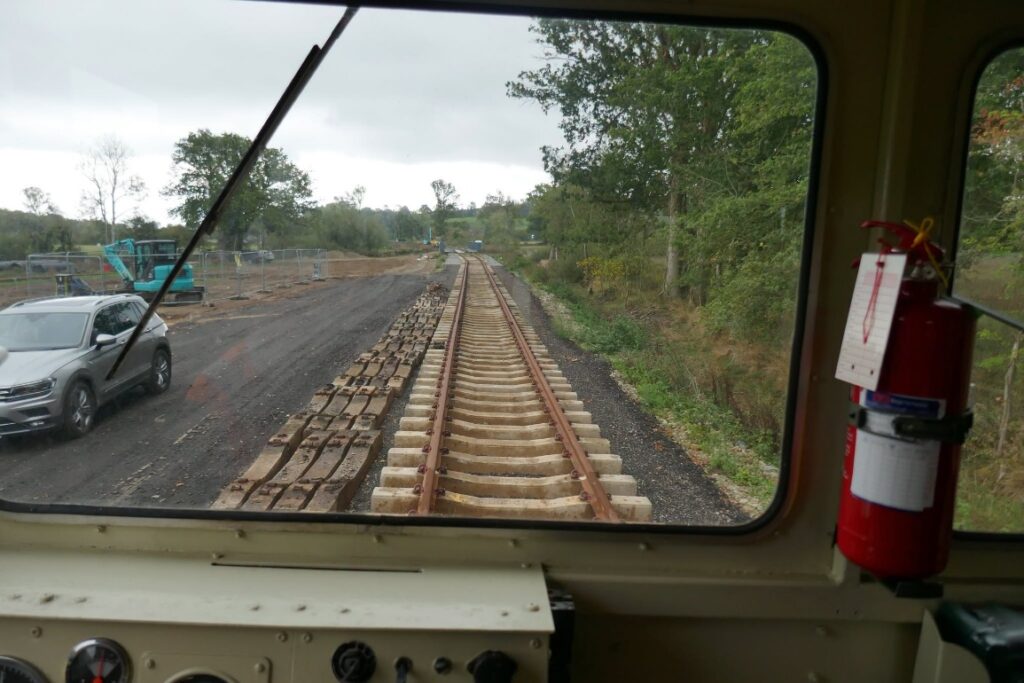
On Wednesday, we loaded up the Baguley unit for transporting to the site at Junction Road where it was unloaded onto the newly laid track and the testing started after its service and repairs by the 4253 team.
This shot is the view from the cab and it’s the first rail vehicle to travel on the new track laid from Robertsbridge.
Friday started with drilling holes in the bottom of 4253’s cladding sheets for drainage purposes after which we removed the smokebox door to give better access for the digger forks. We then started stripping out the smokebox of all its fittings which began with the petticoat pipe,
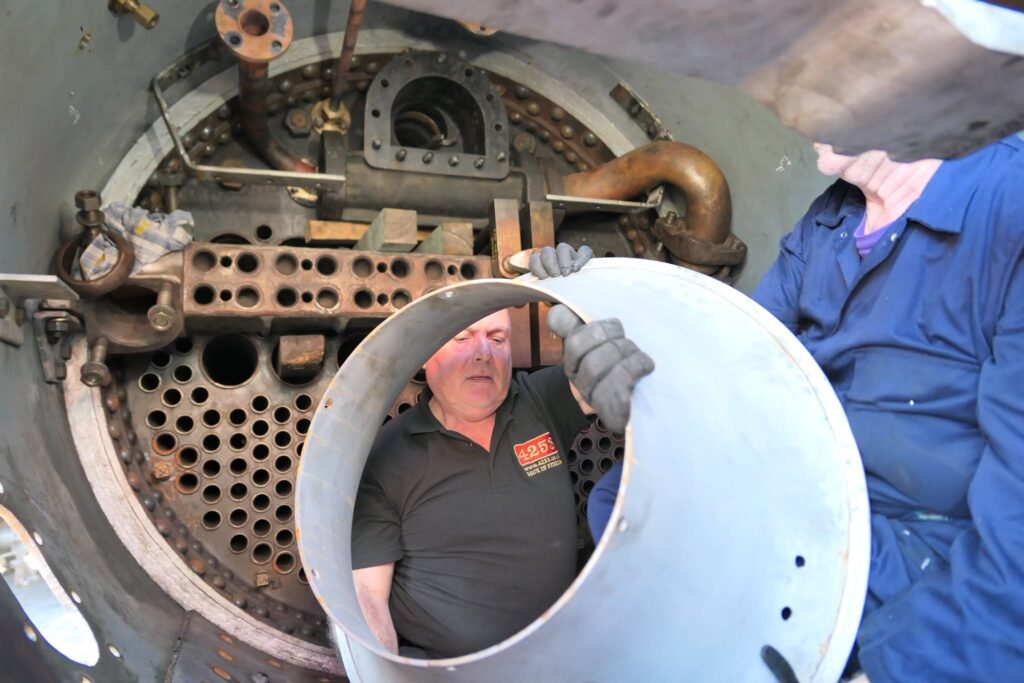
blower ring pipework, lubrication splitter with pipes, main steam pipes, the superheater header
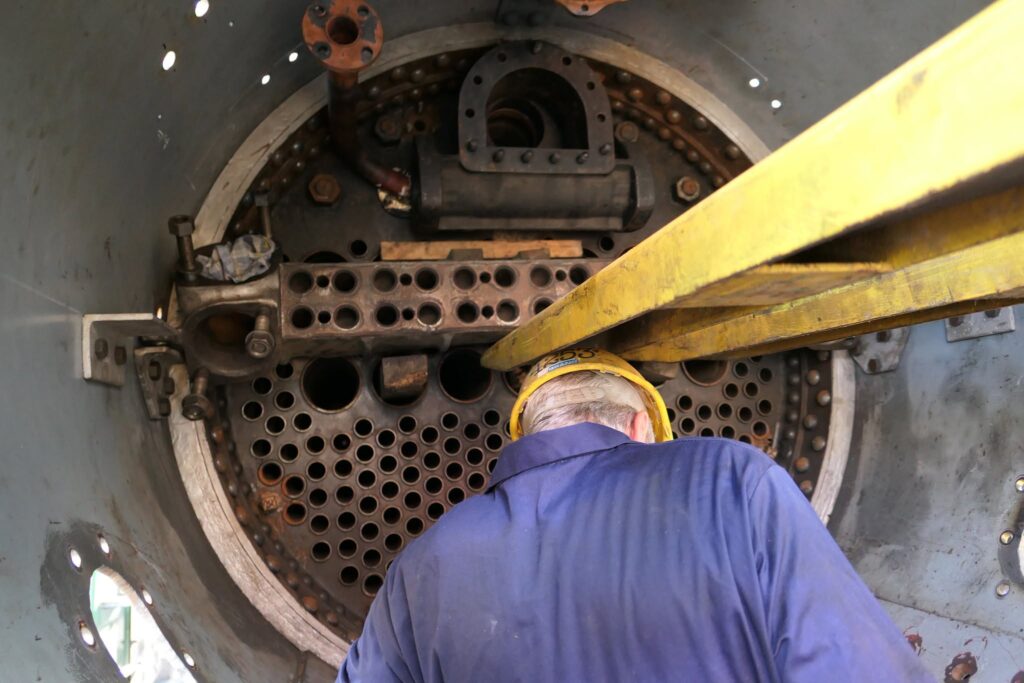
followed the regulator box,
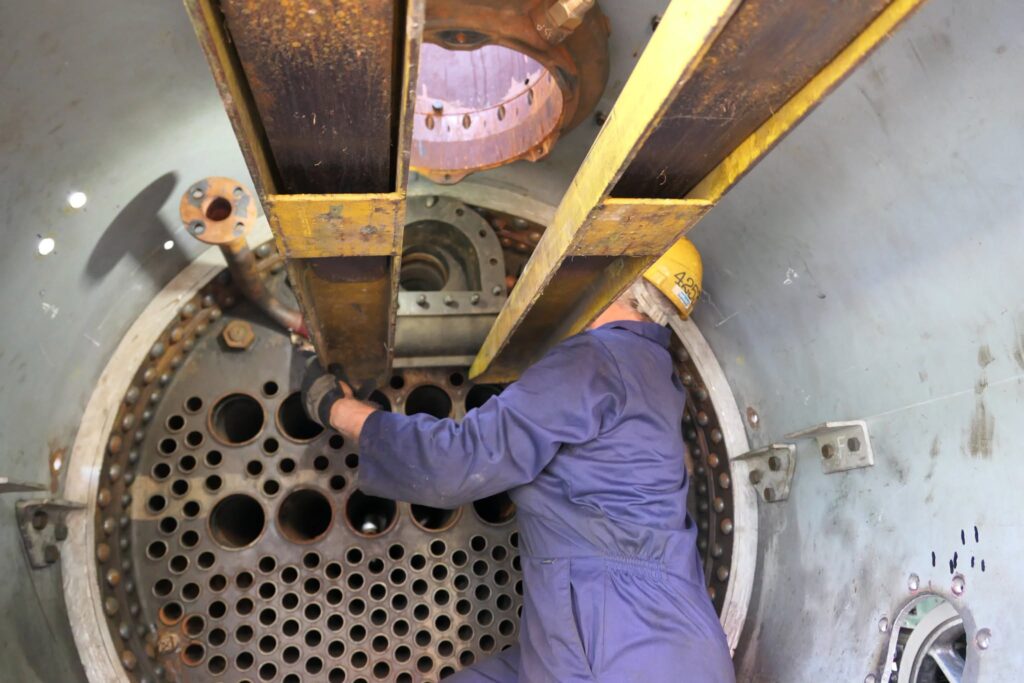
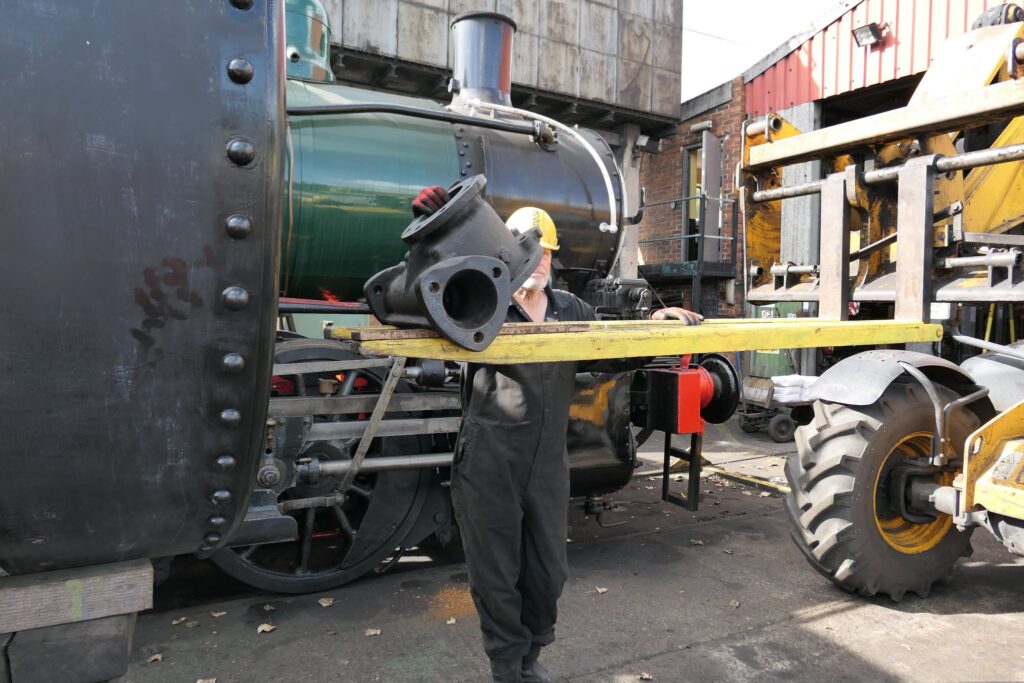
after which, with everything removed
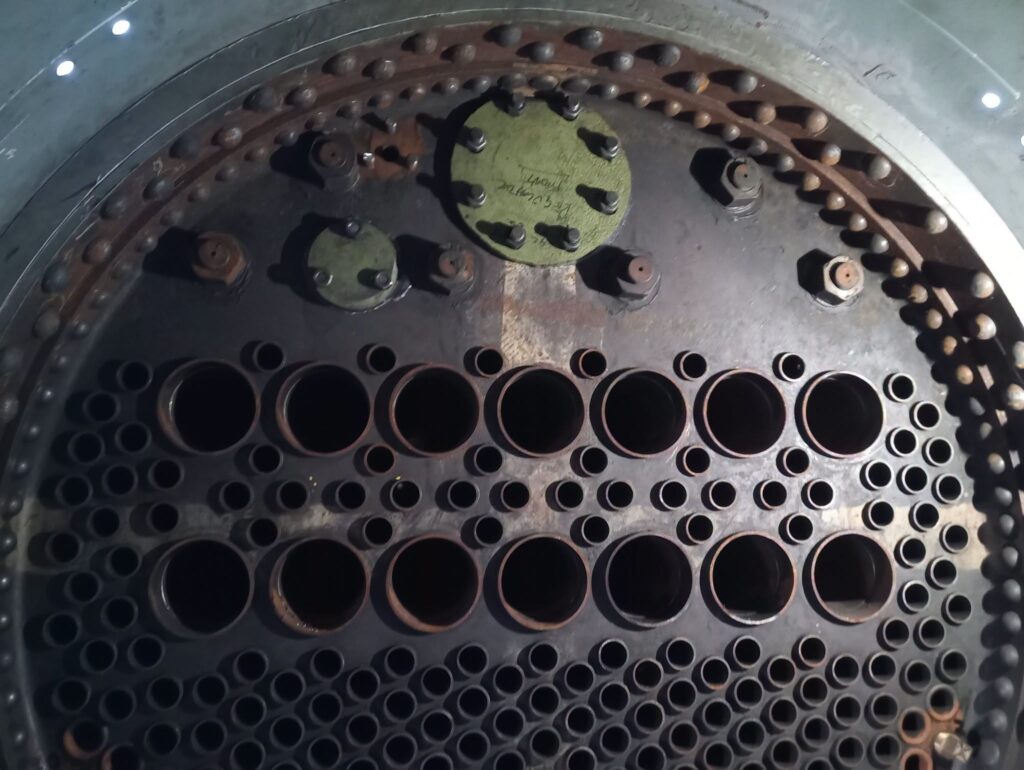
the smokebox door was refitted The firebars were removed from 4270 and, as the inspection of the ashpan had revealed two bent damper doors, they were removed for straightening.
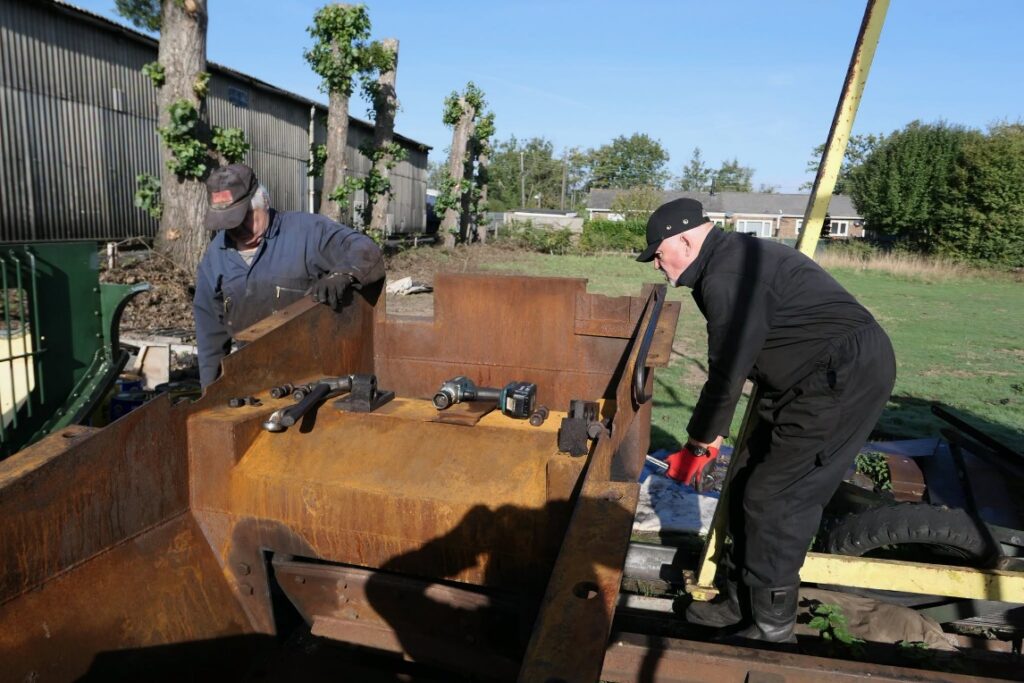
On Sunday, the team got to grips with 4253’s smokebox door to make it shut properly. It was a case of making and fitting shims under the bottom hinge and a slight dressing of the door edges. We also made parts for the blow down valve linkage bending up steel to allow it all to fit together and the machining of a banjo unit for the blowdown valve has also been finished.
Finally, we lifted the ashpan out of the frames on 4253 to assess the slight alterations that we need to do to make it fit correctly as it’s a tad tight at the moment.