Progress April 2026

Week 4
This week’s main job was riveting the floor plate to the outer angle on the 5164 bunker
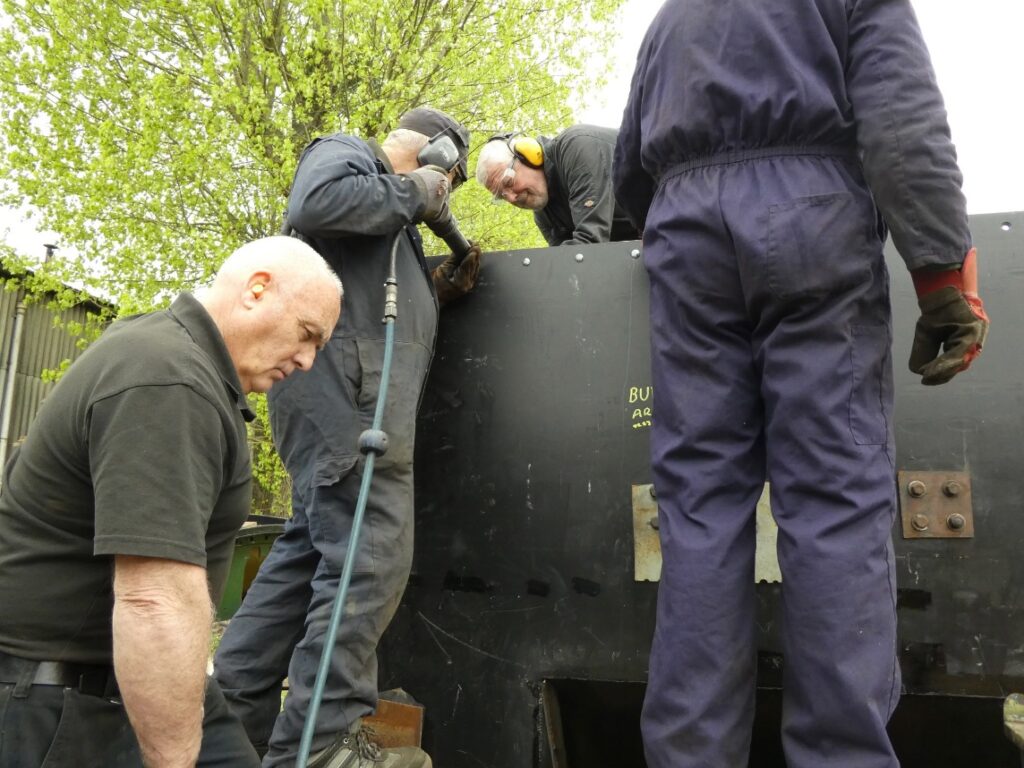
and then turning it upright so the rear ducket could be lifted into position and bolted to its brackets ready for final welding.
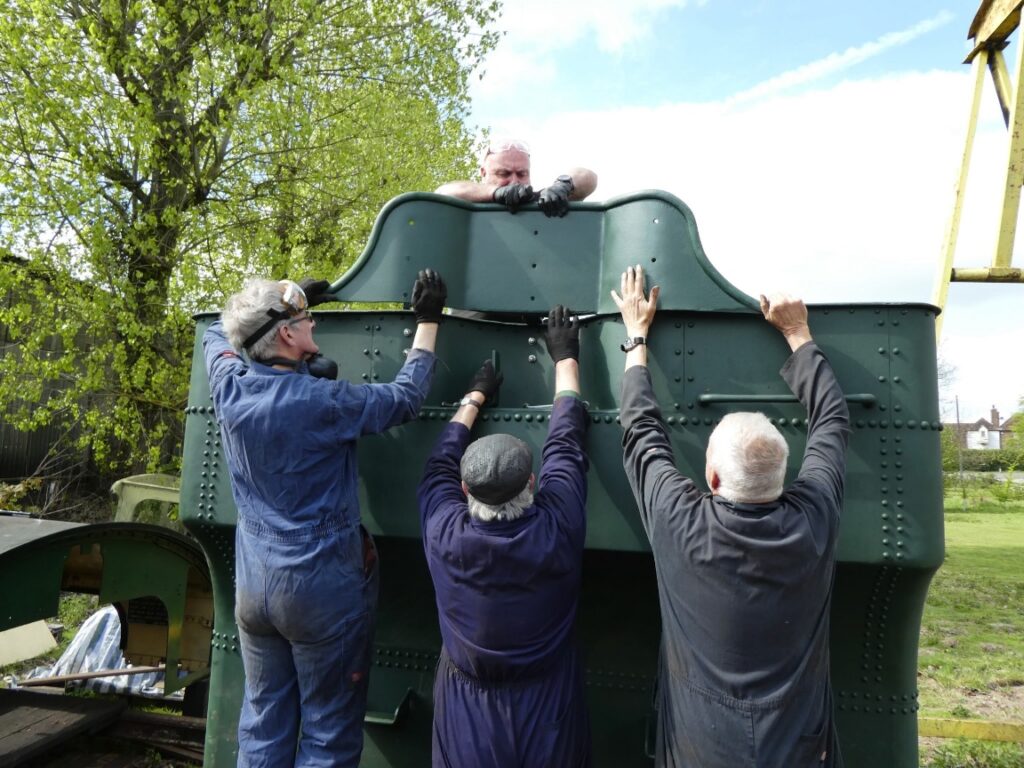
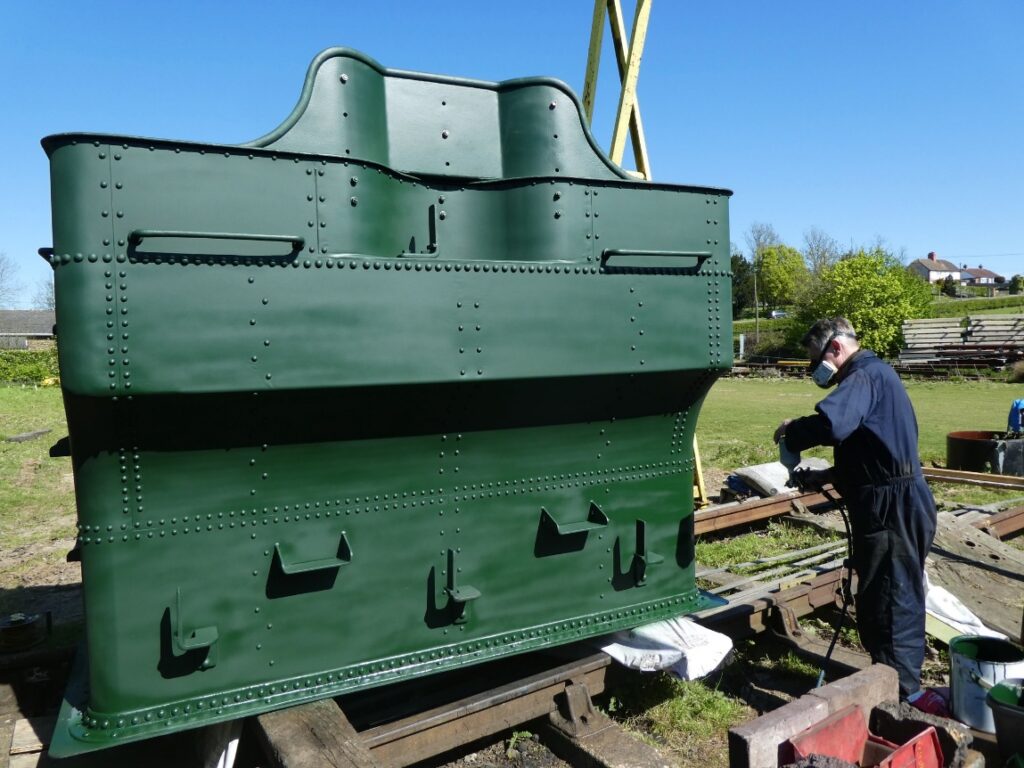
After that, it was given another spray coat of undercoat.
Meanwhile, another team was continuing with the fettling of the elephants ears cladding round the front of the firebox with parts being marked and taken down,
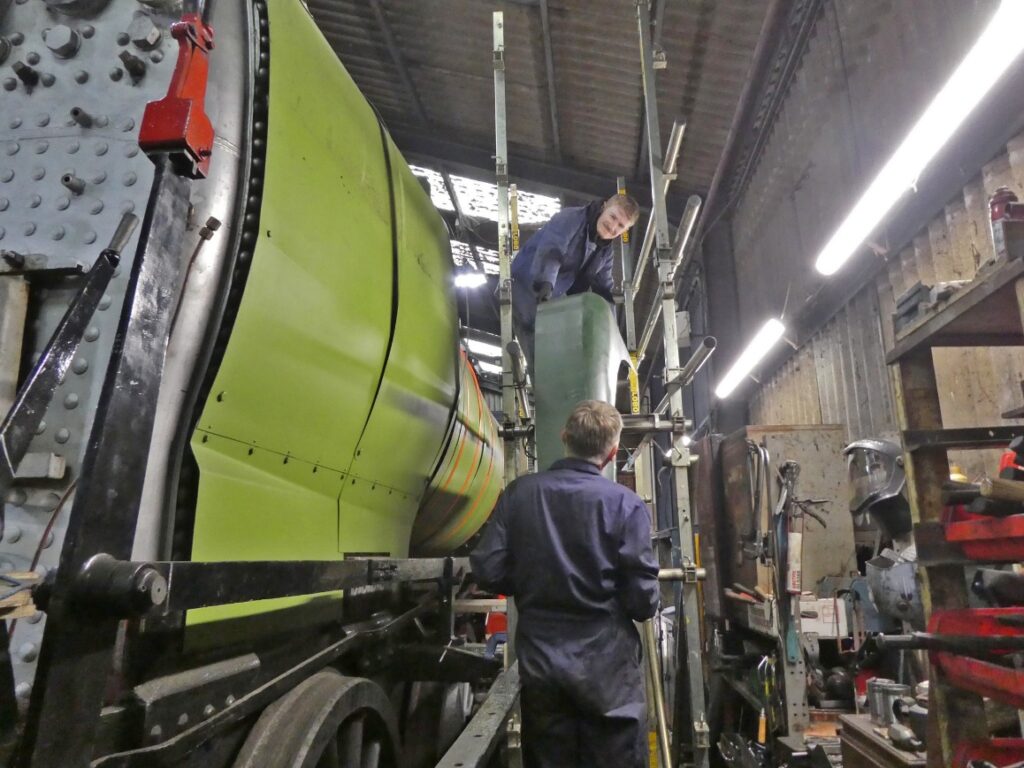
bits getting trimmed off
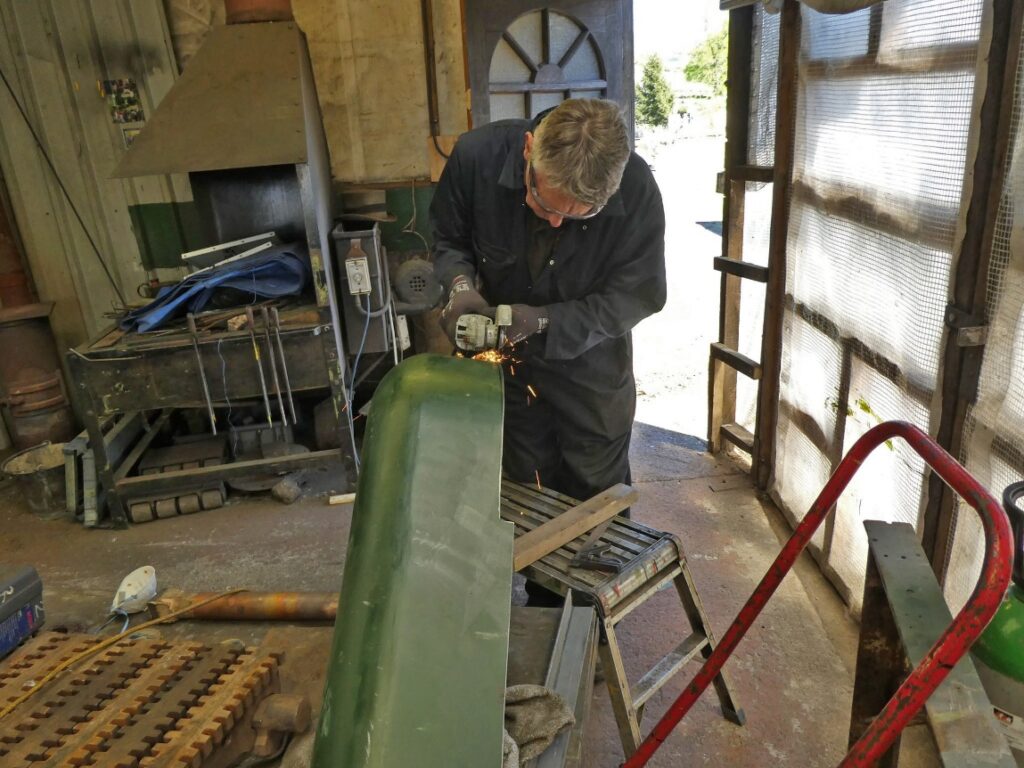
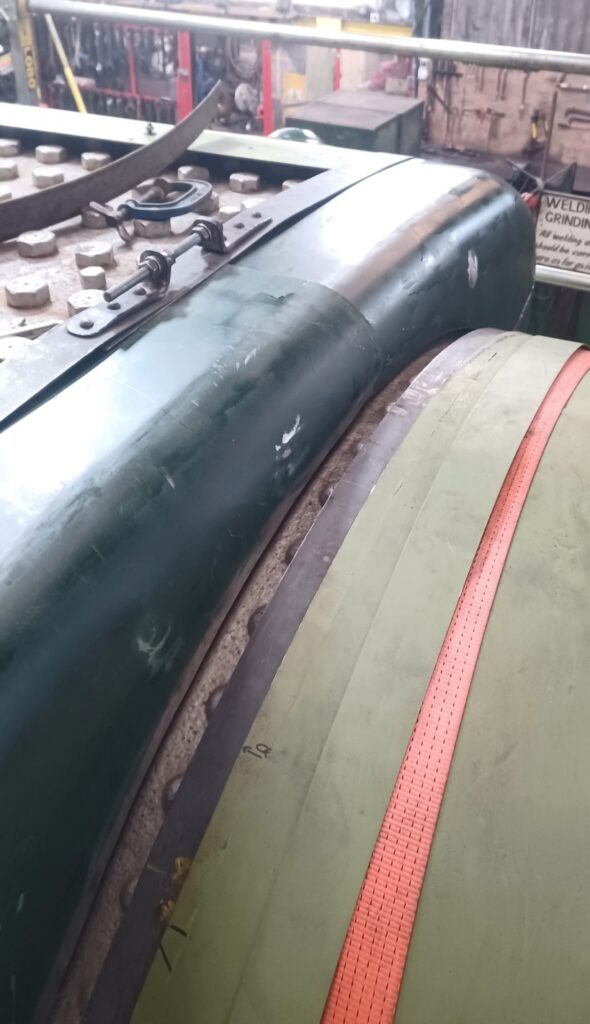
and then refitted until, finally, the top sections were fitting together nicely.
At the smokebox end, the regulator box was cleaned up and moved to the front running plate
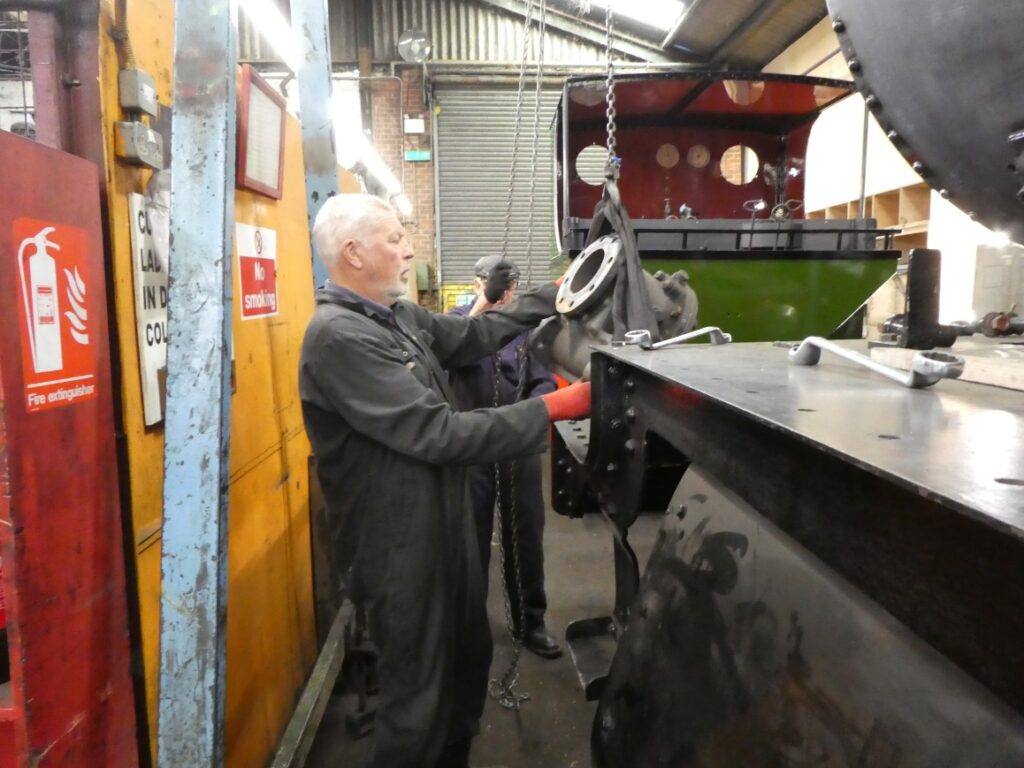
and the regulator rod was removed from the boiler.
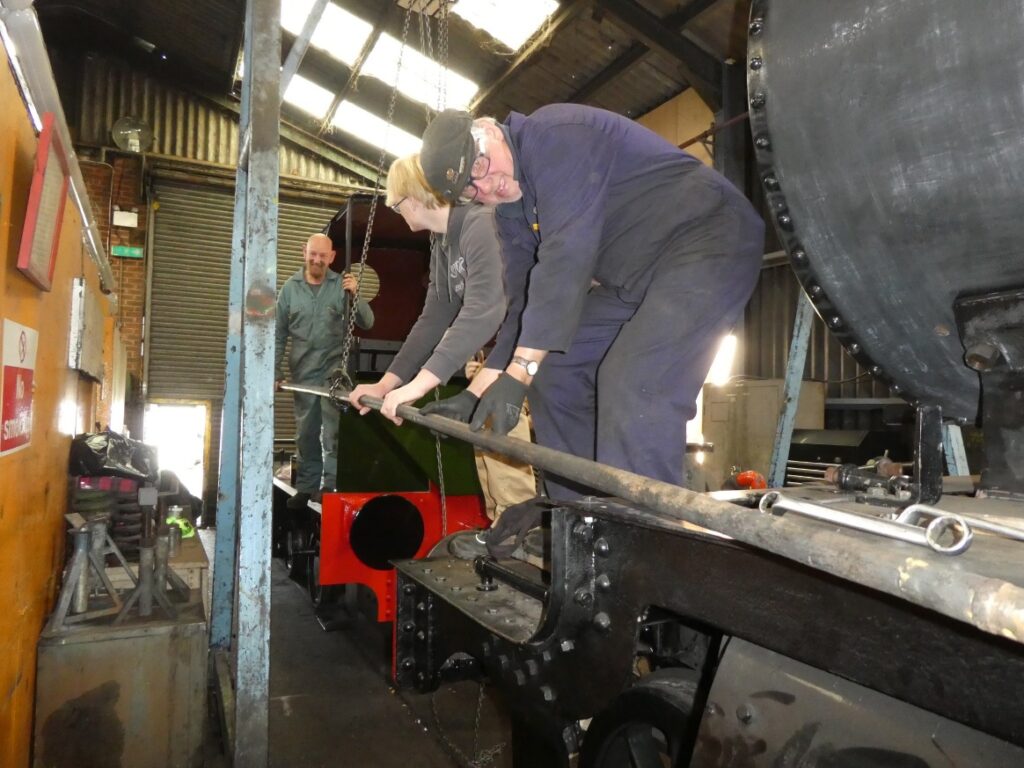
We also started closing off the various boiler outlets in readiness for its next hydraulic test with blanking plates and rubber gaskets being made and fitted.
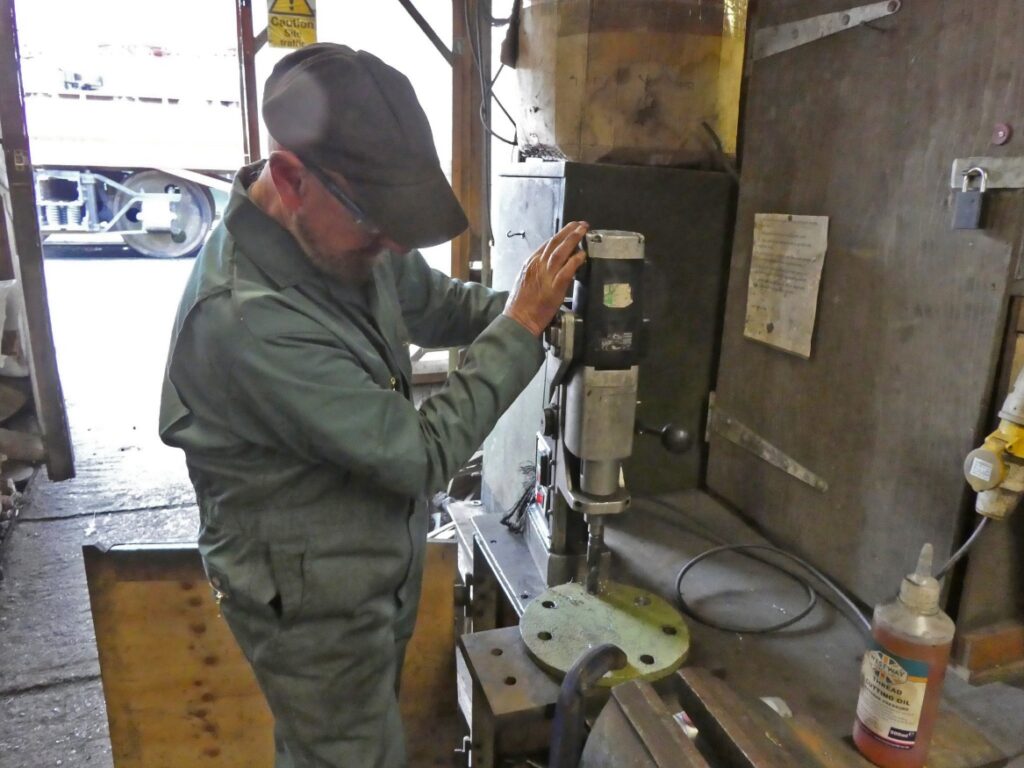
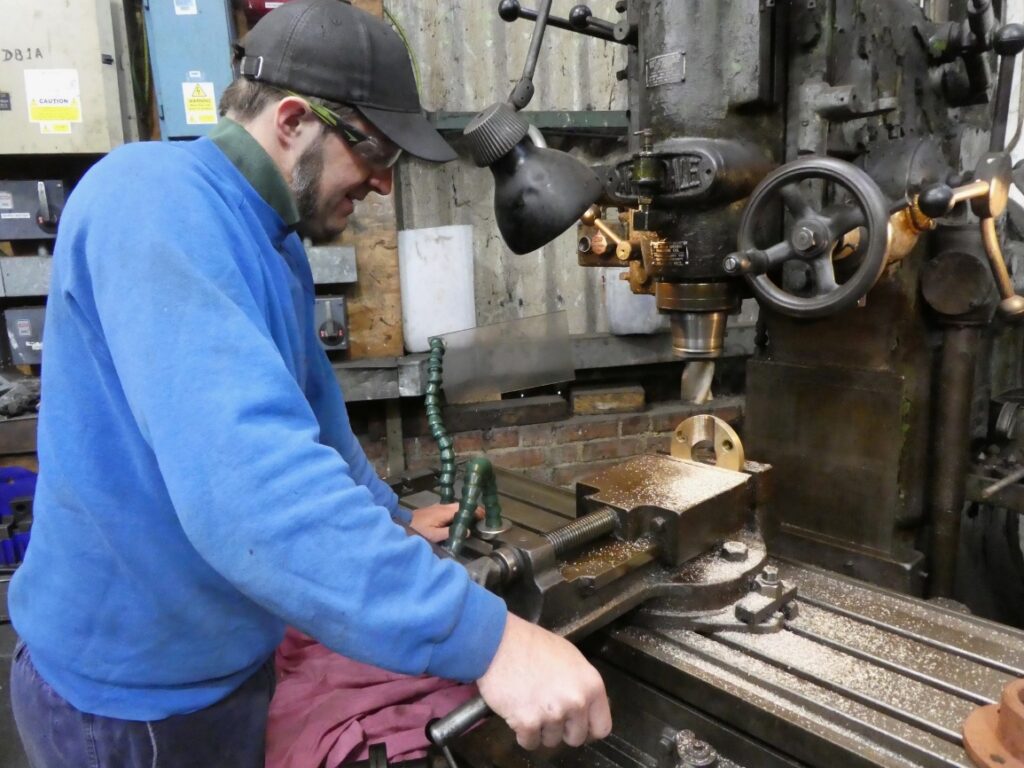
The brake ejector pipework was made up starting with the flange being machined to accept the very close pipe at right angles,
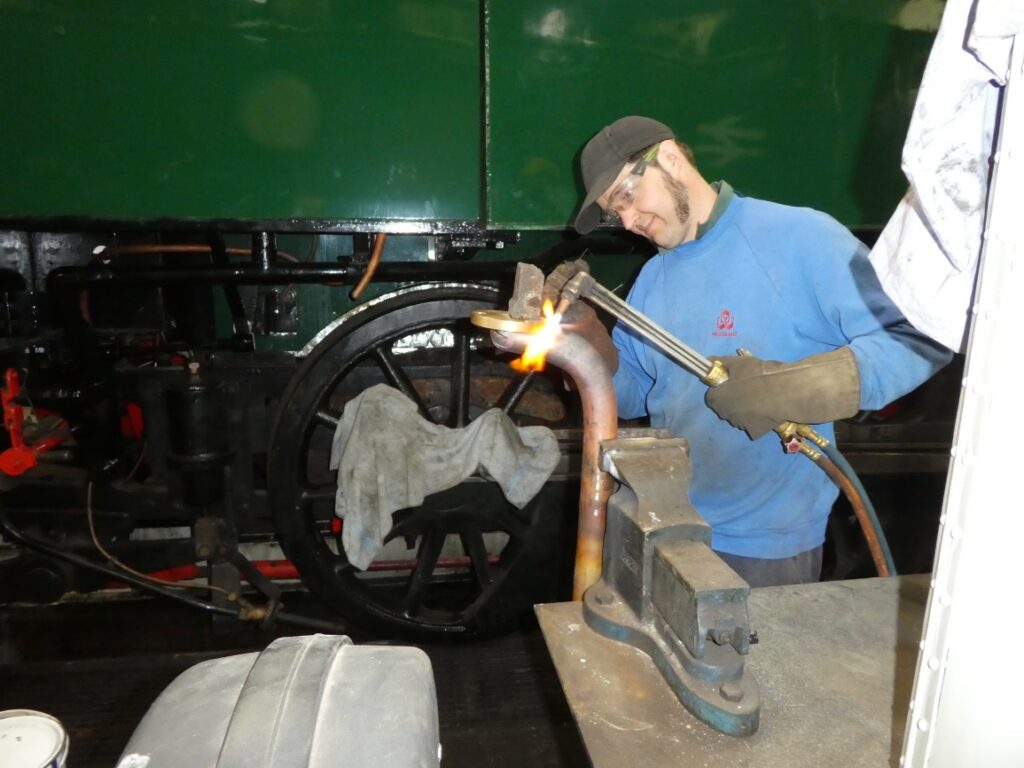
the pipe itself being bent and shaped before being brazed to the flange.
The final job was skimming down a spacer to fit inside the steam pipe covers
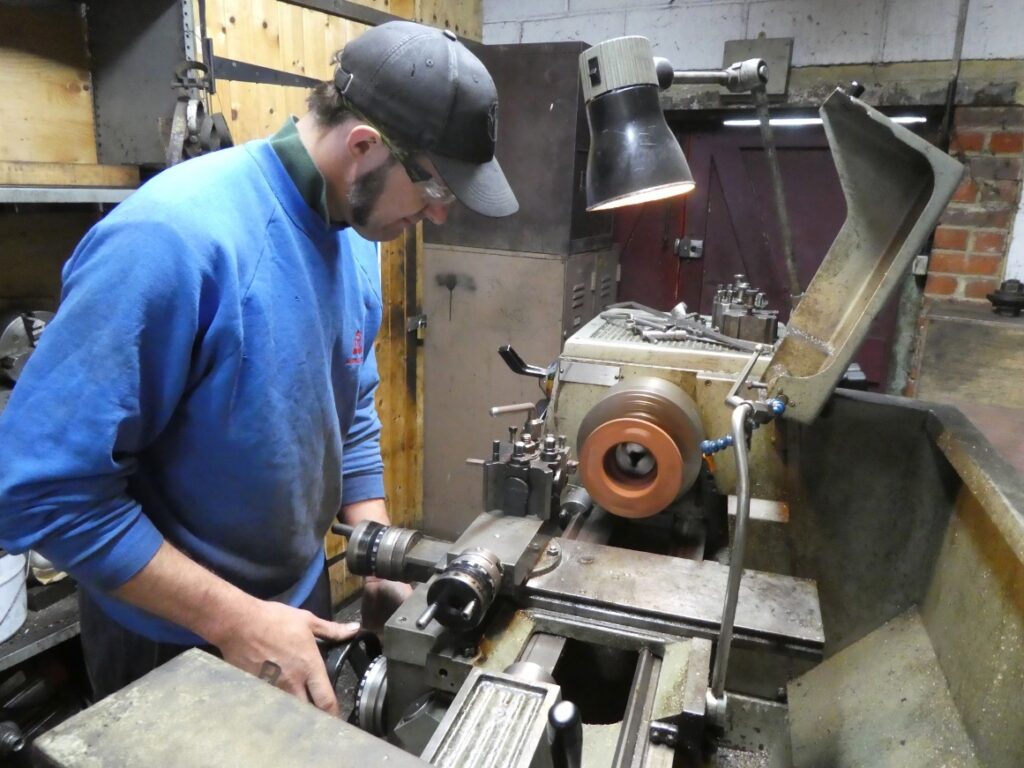
and thereby hold them in the correct position for having the joining brackets welded on.
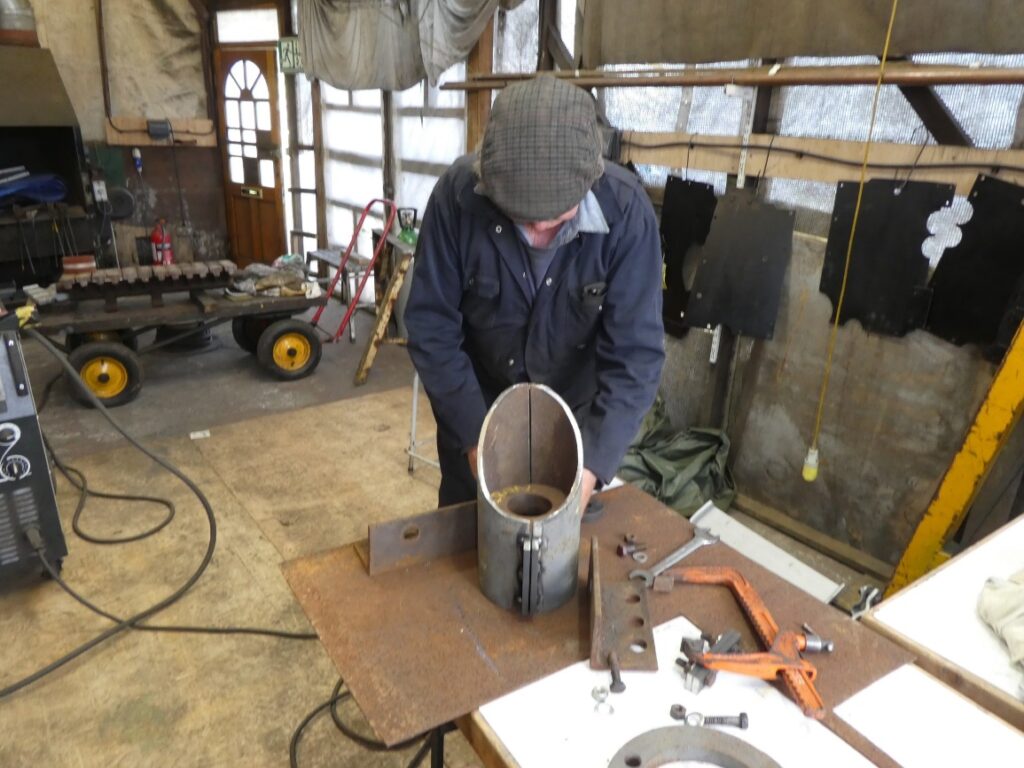
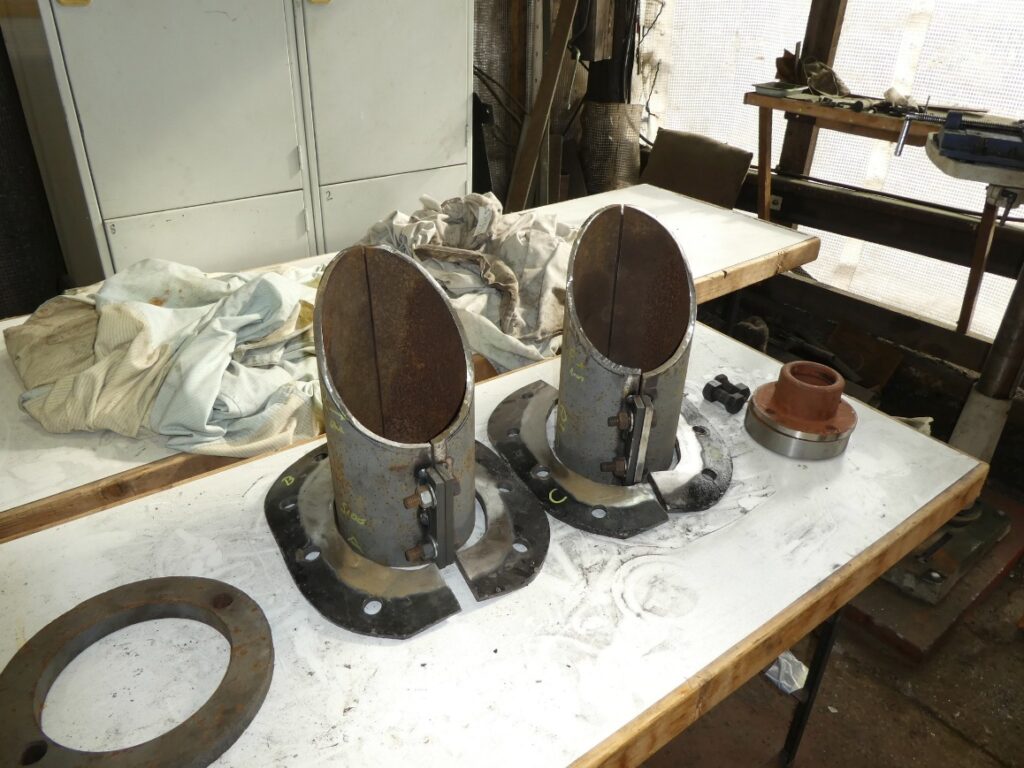
This shot shows the finished job with the covers bolted together and sitting with the flanges they will eventually be welded to.
Week 3
This week, Tuesday involved more putting up, marking and taking down of the elephants ears cladding sections with some measuring and cutting taking place in between times.
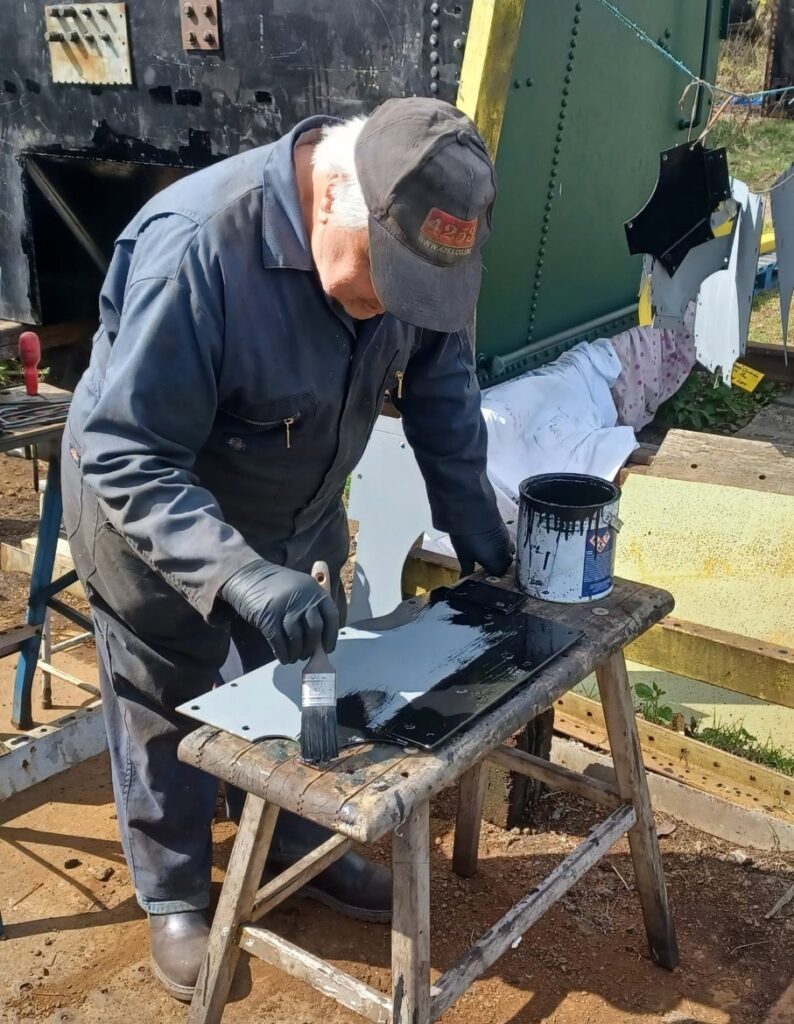
Also, the backhead cladding sheets got their first undercoating in black,
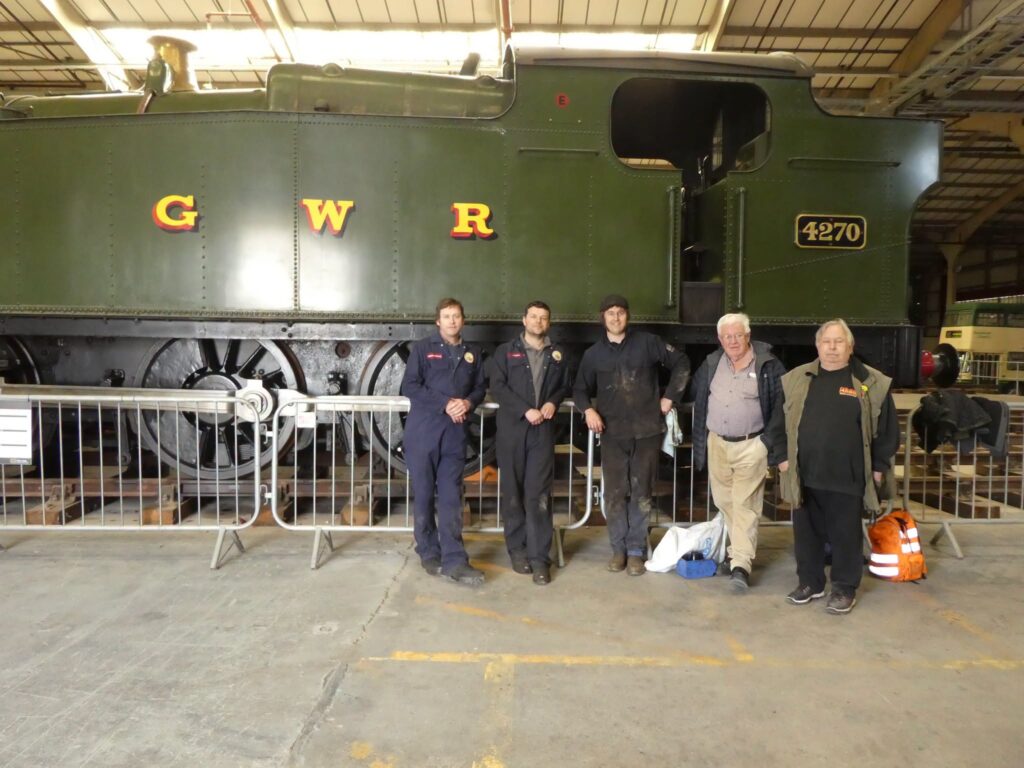
but the highlight of the day was a visit to see GWR 4270 at Margate with a couple of the engineers from Crewe to carry out an inspection and schedule of condition prior to the loco coming to us,
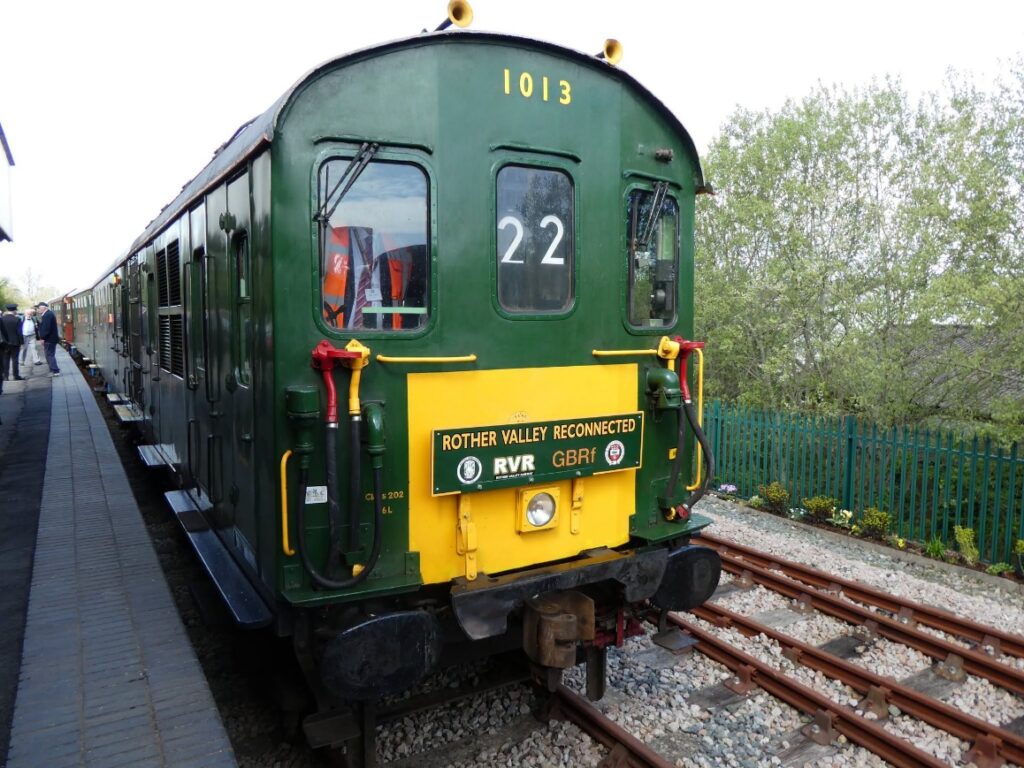
Friday saw the second jolly of the week with the board of 4253 being invited by the Rother Valley Railway to travel on the Hastings unit run from Robertsbridge to Tonbridge and return to celebrate the opening of the new station building and the official opening of the main line link . A special thanks is due to Helen and her team for all the hard work presenting a very well-run event and a very enjoyable day – thanks from all the team at 4253.
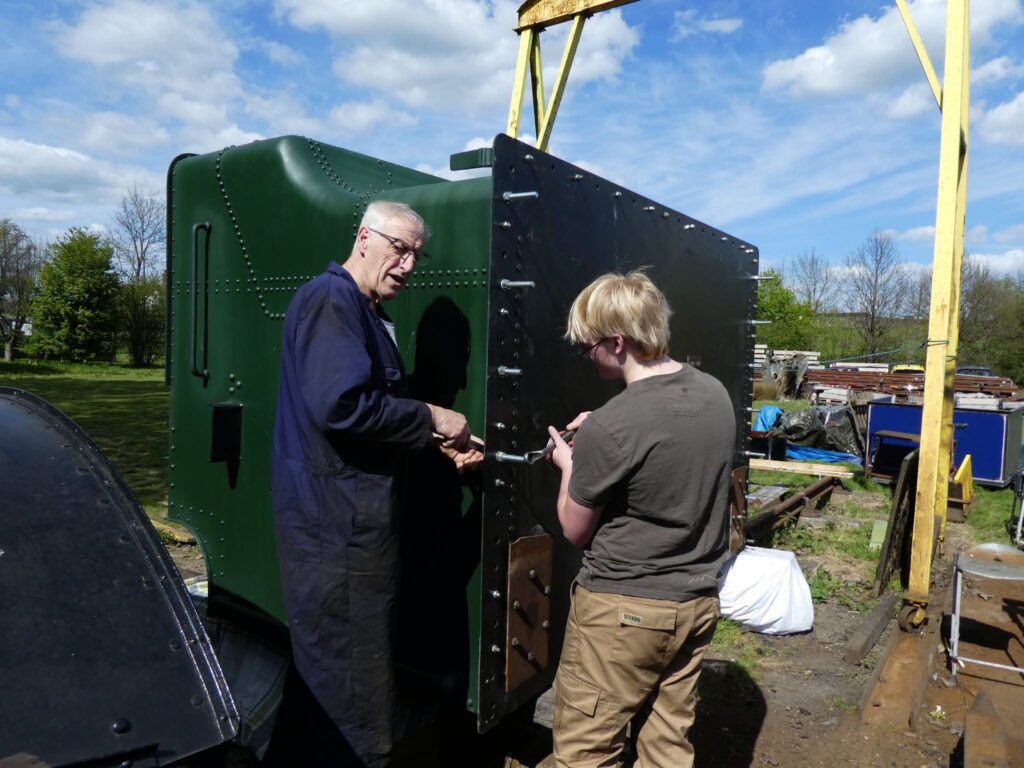
We only had a small team for Sunday but the 5164 bunker had the last of the welding undertaken on the underside plus the floor panel was bolted to the side angles using all the holes that will eventually be used to bolt the bunker to the frames. That way, all the countersunk holes we need to rivet can be undertaken in one run – a job scheduled for next week.
Some work was done on ascertaining the mounting bracketry we’ll need for the drop grate being fitted to 4253
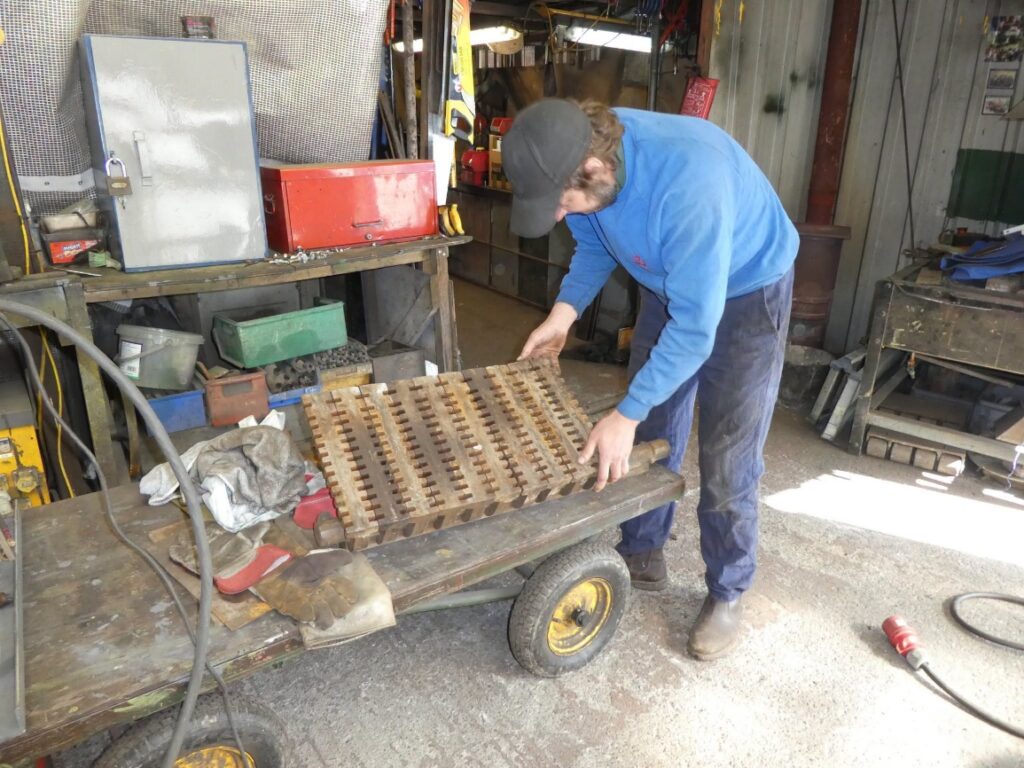
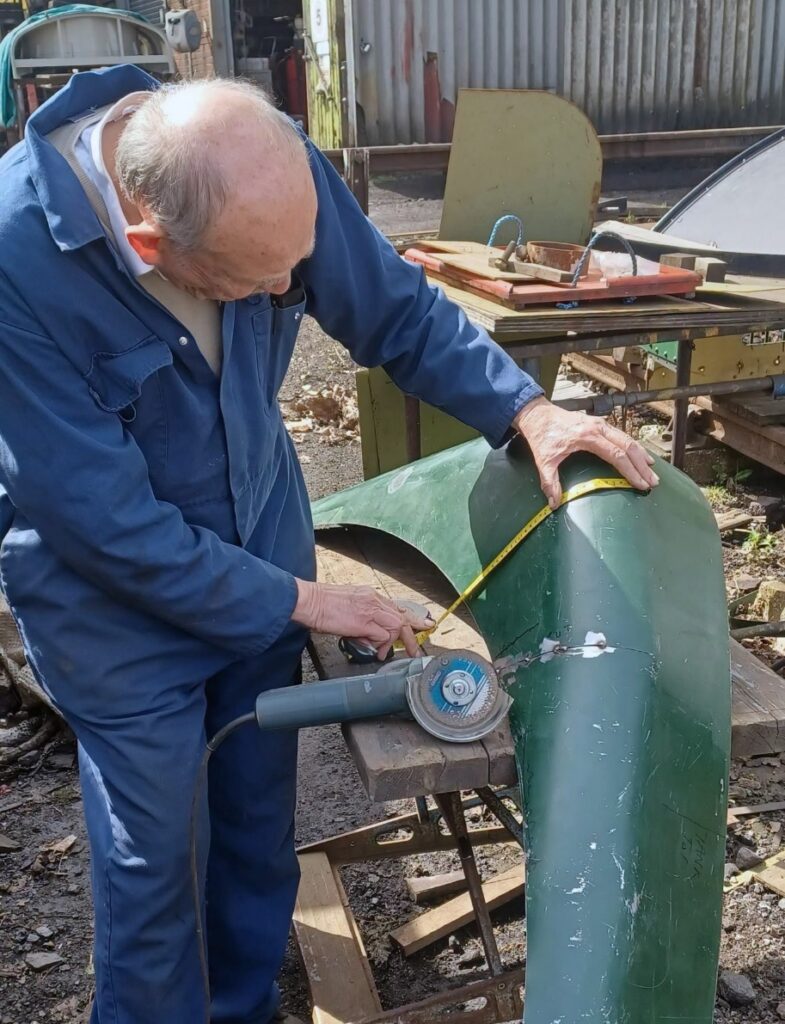
and the main steam pipe covers were roughly cut to shape and then ground back
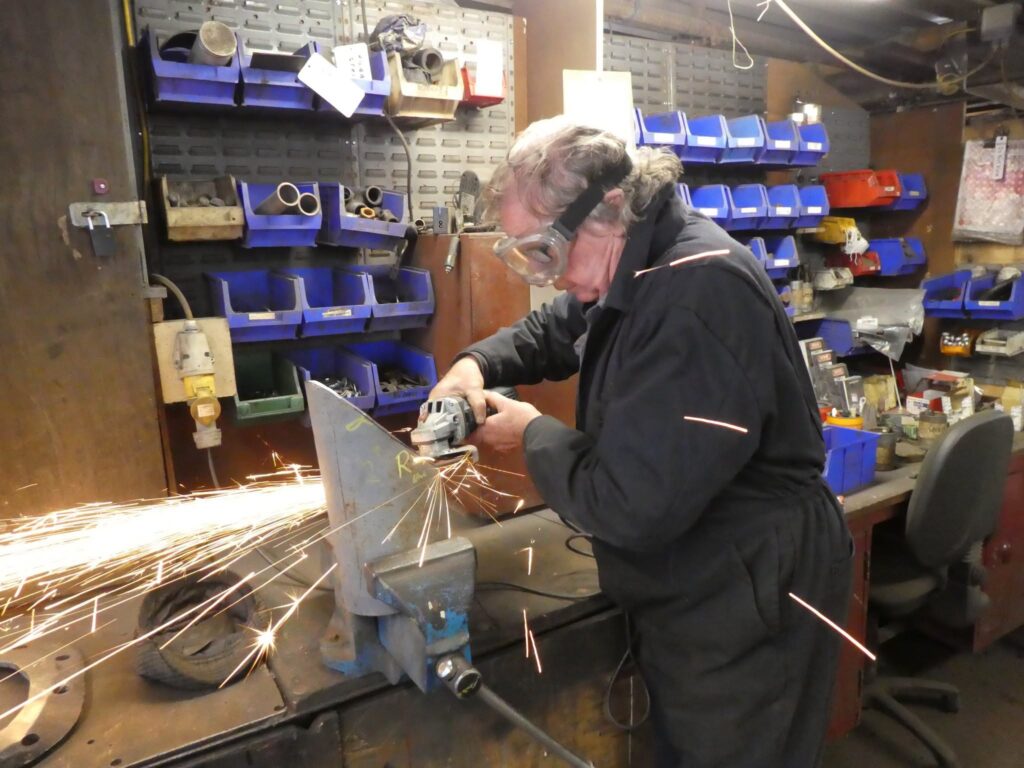
to fit the curvature of the mounting plates on the sides of the smokebox.
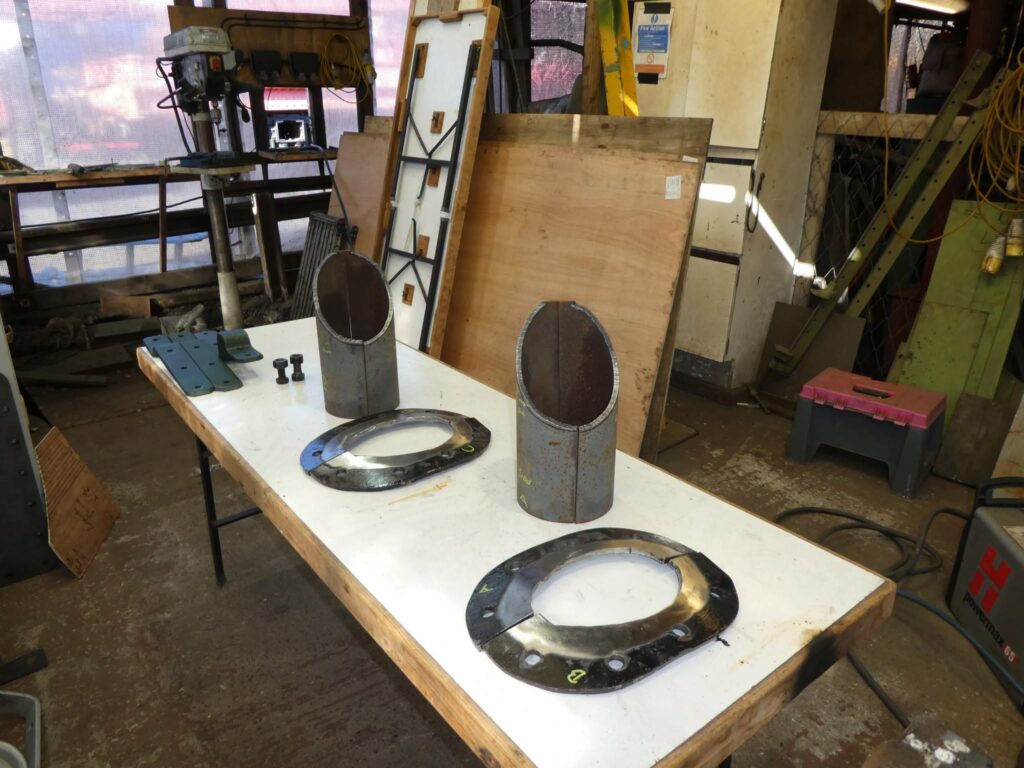
The bars that will be welded to the edges of the covers to enable them to be bolted together were also cut and drilled.
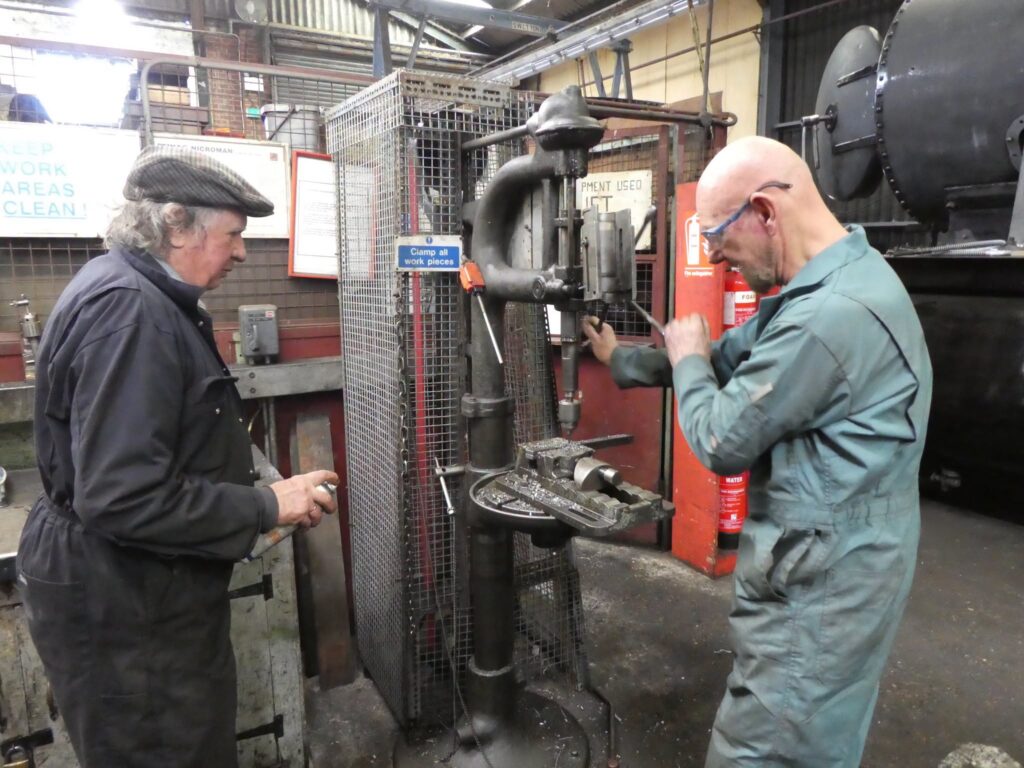
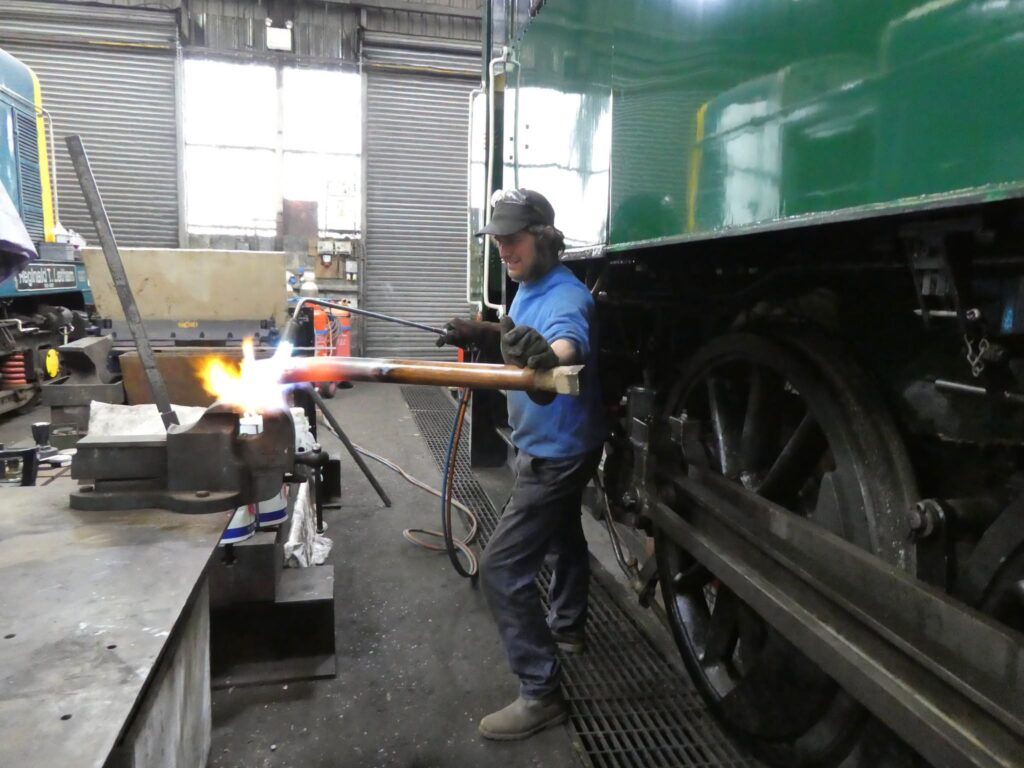
The brake ejector smokebox pipe was cut to length, a stop brazed on one end, then filled with sand, plugged then heated to red and bent to shape.
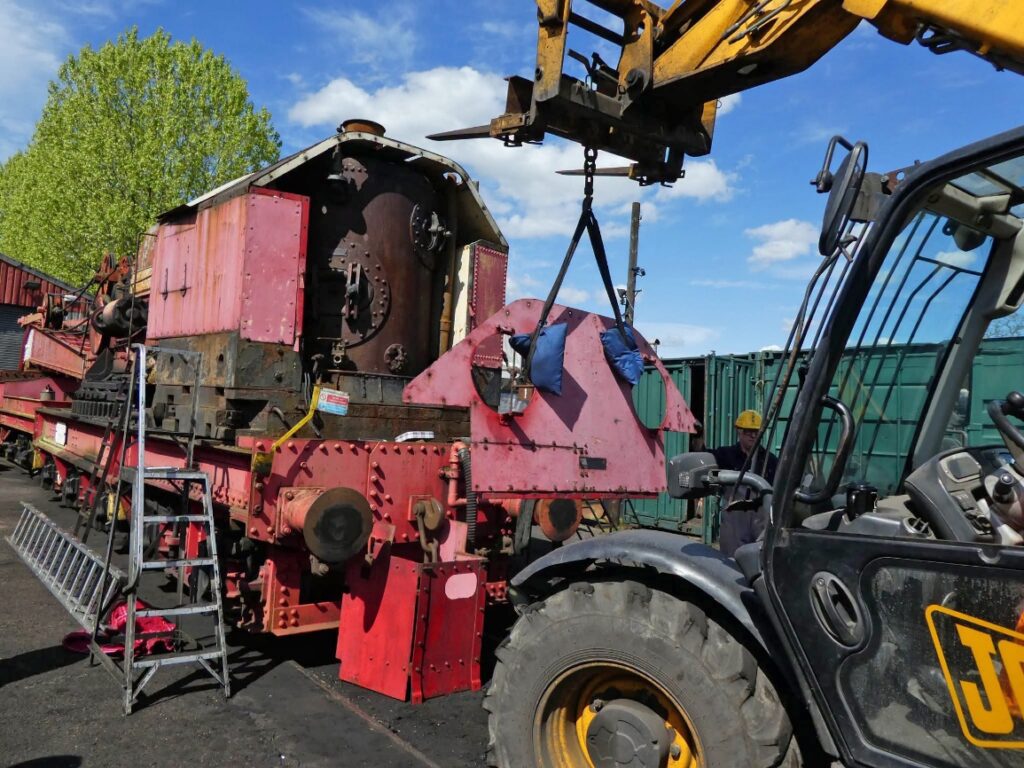
Finally, as we’ll have some boiler lifting work to be done soon, the 36-ton steam crane had the rear sheeting removed to access its boiler for an inspection.
Week 2
Work on the boiler’s elephants ears continued with sections being trial fitted,

marked for trimming

and then having the surplus bits cut off.

In addition one needed a slight change of shape where it fits round the bottom of the firebox so was placed in the hydraulic press for a little tweaking.

The cladding section that fits over the front of the throat plate was drilled and tapped to accept holding brackets,

At the smokebox end of the loco, the covers for the main steam pipes were marked out for cutting where they will meet the curve of the smokebox. A job that took some considerable time to get absolutely right using the plywood template made last week.

For 5164’s bunker, it was time for it to be moved outside so it was jacked, placed on machinery skids and manoeuvred towards the double doors where, having taken measurements, we were confident it would just get through. Unfortunately, those measurements were taken prior to fitting the rear handrails so we had to take them off again whereupon it fitted with literally less than 2 inches spare per side.

Once out, strops were placed through the lifting eyes and it was taken into the field

and then placed on its front to give access to the floor panel and to enable us the rivet the floor to the bottom angles. The belly tank section that had been welded in from the inside last Sunday was then welded along the outside seams

and, in preparation for the water test, blanking plates were cut and drilled for the balance pipe and injector holes

and then bolted into place with gaskets.

Finally, the belly tank area was cleaned down and given a coat of paint.

Week 1
The primary job on 4253 this week was the fitting of the elephants ears sections of cladding on the front corners od the firebox. After some measuring, the first trimming cuts were made

and, after a bit of offering up and more trimming, the upper section on the fireman’s side fitted very well.

Next it was the lower section which, after the initial round of marking out and trimming,

was found to be sitting a little too far away from the boiler. To rectify, a number of slits were cut into the sheet

which, when closed up, resulted in it sitting correctly. These slips will be welded up in due course.

While all the fill-in sections of cladding between the backhead and the rear of the firebox were off, they were all strung up outside and given a spray coat of paint with this shot showing the complexity of shapes involved.

At the other end of the loco, we were making templates for cutting the outside steam pipe covers to the radius of the smokebox. This involved starting off with cardboard shapes

before transferring them to plywood.

On 5164’s new bunker, the entire outer surface was cleaned with a tacky cloth to remove all traces of dust after which it received a second spray coat of green undercoat.

The corners of the lower coal floor were welded to make watertight after which the panels that shape the cut-out at the front of the bunker were offered up with the triangular side pieces being tack welded into place. The sloping closing panel was found to have quite a pronounced curve to it so was taken into the main workshop where it was placed in the hydraulic press and carefully bent straight again. It was then transported back to the bunker,

placed in position and tack welded in. After everything was deemed satisfactory all the panels were fully seam welded.
