Progress November 2026
Week Two
First job this week was to move the ashpan into the shed so we can continue working on it in the dry. Following the last sections being cut out last week, all the edges were cleaned up with a grinder after which the job of boxing in the holes could start. First though, the gap for the axle was jacked out to the original width (it had slightly closed up when the upper parts had been removed) and a couple of lengths of angle were welded across the gap to keep it in position.

The initial task was to cut out and tape together various bits of cardboard

until we had an acceptable overall shape.

Following that, the side sections were placed on 5mm steel sheet, marked round and then cut out.

The sections that fit over the tunnel for the axle will be finalised and cut once we’ve ensured the fingers of the drop grate will have sufficient room to operate including an allowance for heat expansion.
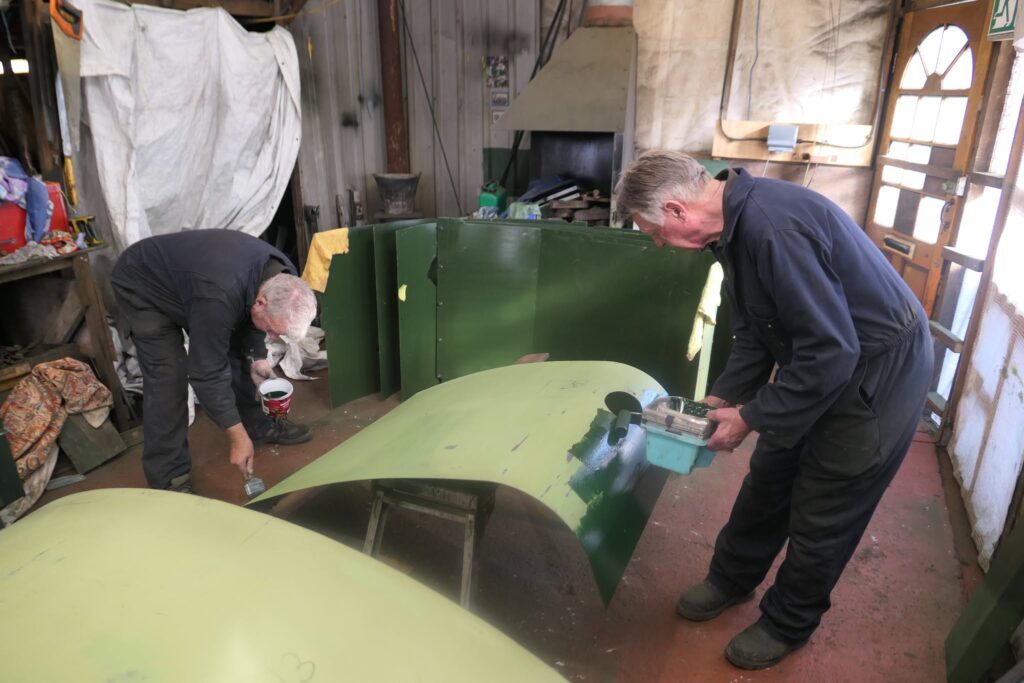
There are still plenty of boiler cladding sheets requiring more coats of paint so the job of rubbing them down and applying another coat continues.

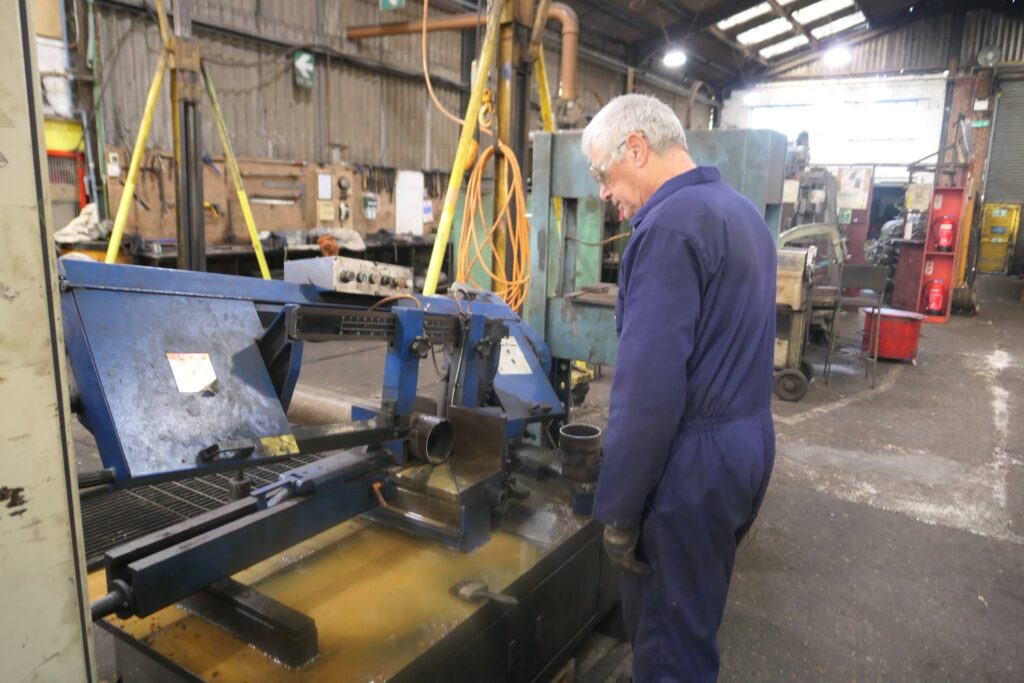
With the Santa Specials starting at the end of the month, we have entered full-scale clock production to stock our sales stand. With the flue tubes cut up last week, the sections have been cleaned and the edges smoothed

followed up welding on the legs

before they received a coat of paint. The final job will be to fit the face and clock mechanism.

An extra job was to resuscitate a generator we were given that had been unused for a number of years. After the carburettor and fuel lines were dismantled and all the muck from the dried-out fuel was removed, it was put back together and fired up on the first pull.

Week One
The first job this week was giving up on the gazebo that we’d been using to store the boiler cladding sheets given we were fed up of the wind repeatedly blowing it over despite the ever-larger weighting down. The old sales trailer was therefore bought down the field and pressed into service instead.
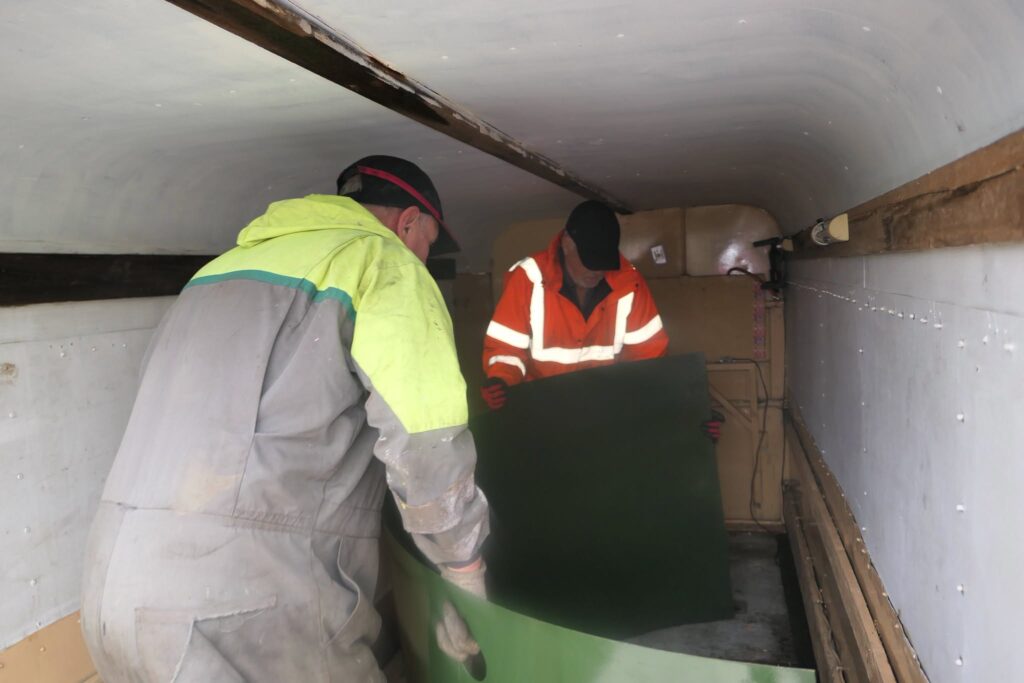
After that, it was more swapping around, rubbing down and painting cladding sheets – a task that seems never-ending.
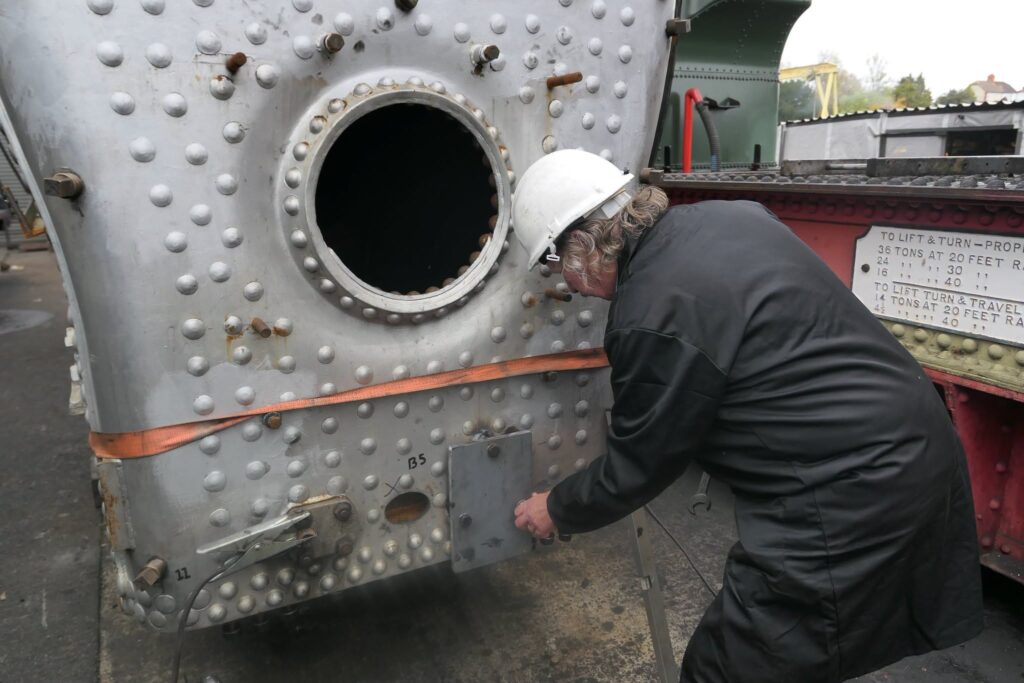
We started making the anchor plate for the drop grate linkage which involved cutting a section of thick plate, drilling mounting holes
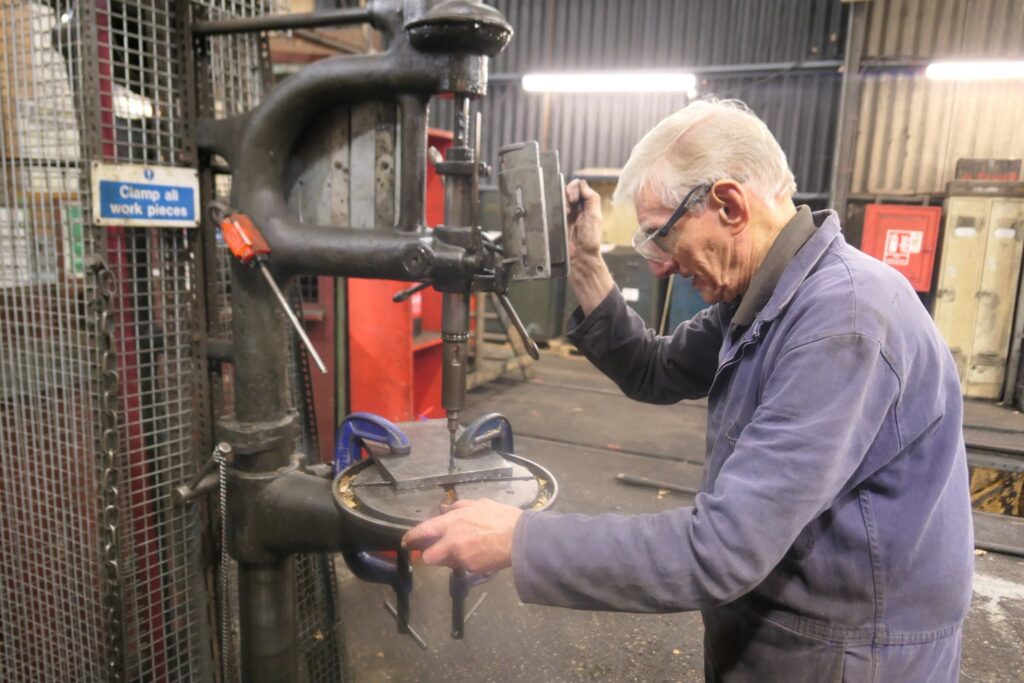
and then machining threaded bosses to be welded to the backhead. After welding them into place, they were given a coat of heat-resistant paint
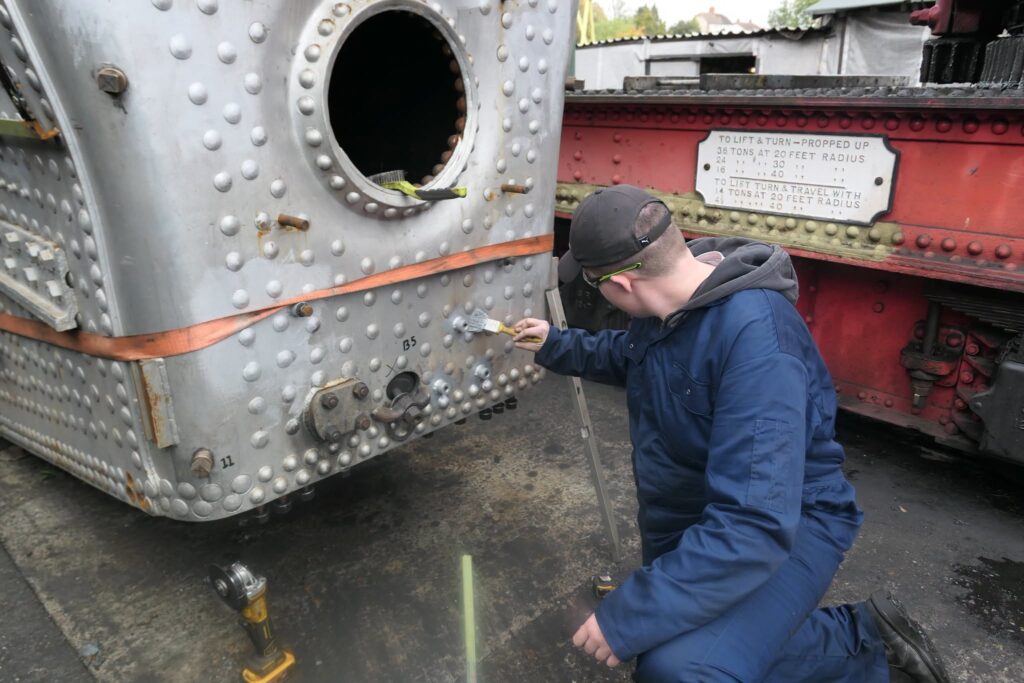
and the plate trial fitted.
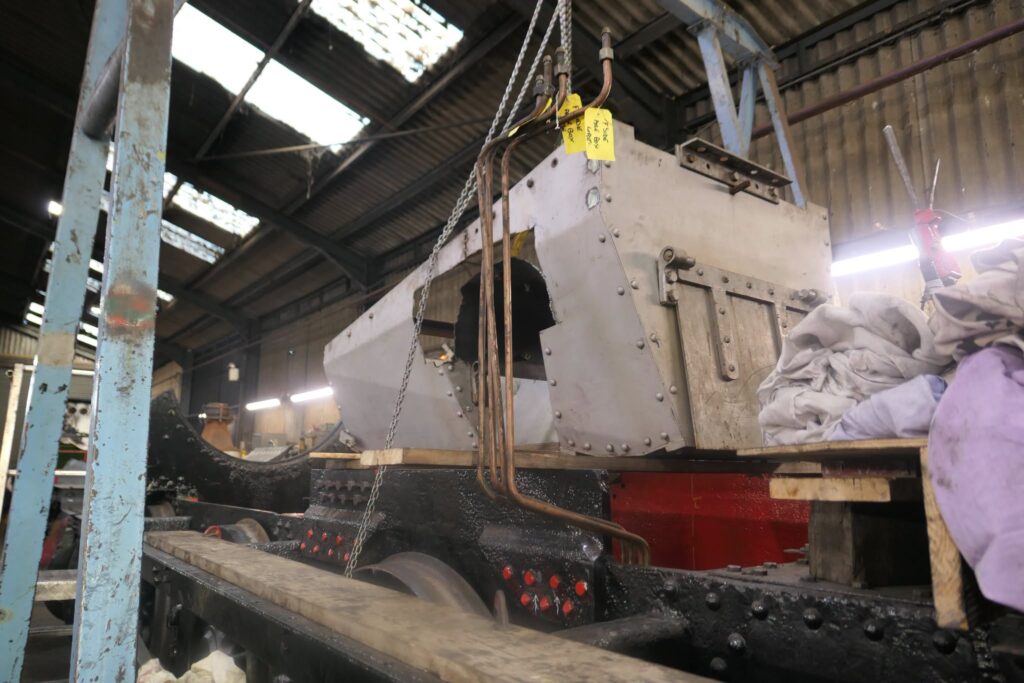
It was then mainly ashpan work with the oil feed pipes to the axle that the pan sits over being fitted to one side to access the amount of clearance.
The loco frames and motion were then given a good clean down
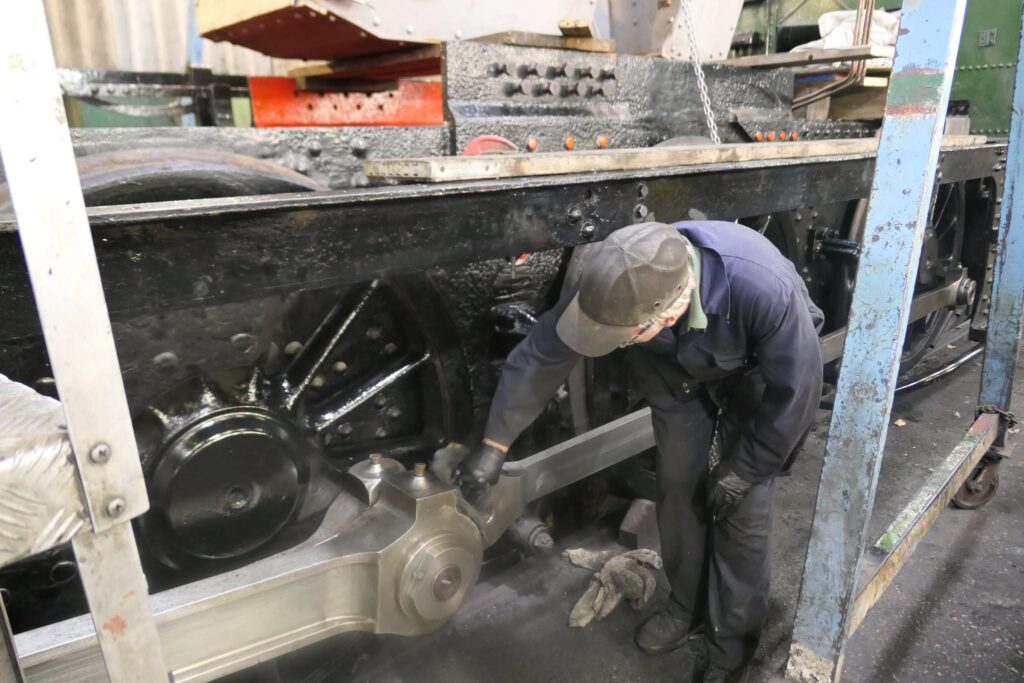
followed by oiling up before the loco was shunted into the yard. The 36-ton steam crane was then used to drop the ashpan into the frames
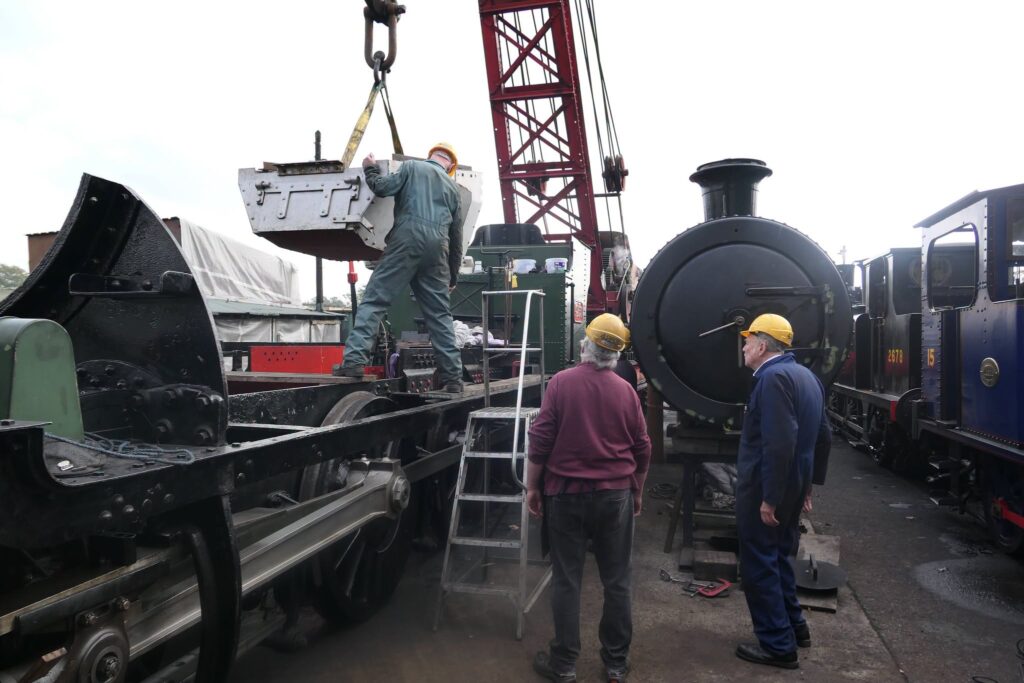
for more measuring and marking where it was fouling the oil pipes after which it was lifted out again for some more trimming back with the plasma cutter. This was repeated a few times until we were happy that the ashpan was sitting in what will be its final position without it touching anything and with sufficient room for the oil lines.
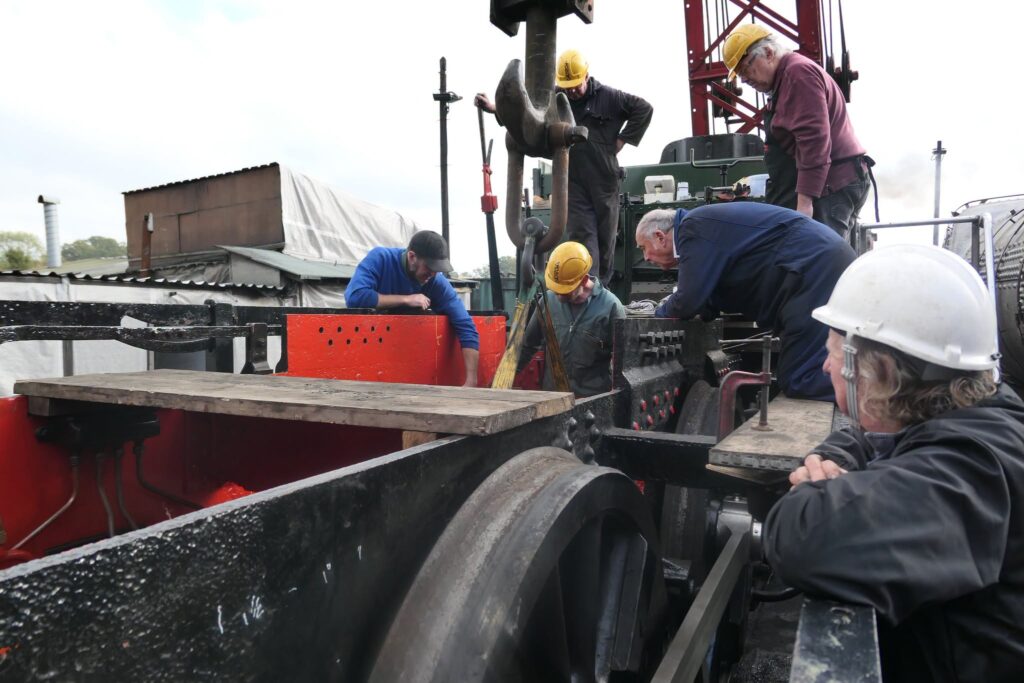
Once satisfied, it was lifted out again and placed on trestles for the cut edges to be cleaned up next week. The tunnel section that acts as a heat protector for the axle was also cut back to match the modified profile of the ashpan.
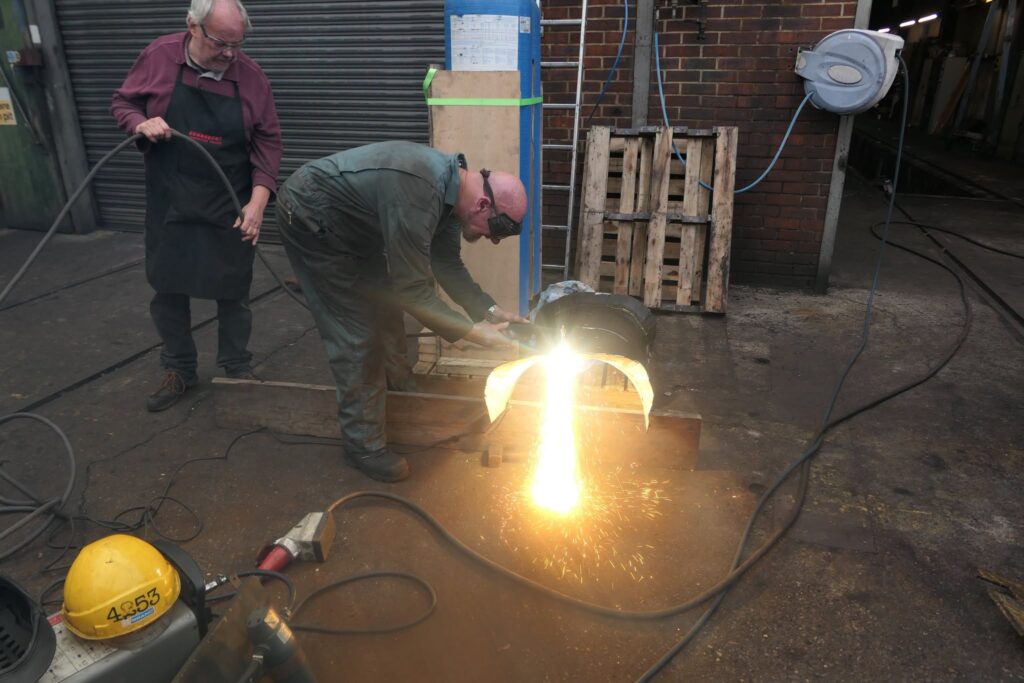
While all this was being undertaken, others were cutting up and shaping clock bodies as we need to increase stock ready for our sales stand at the Santa Specials next month.